
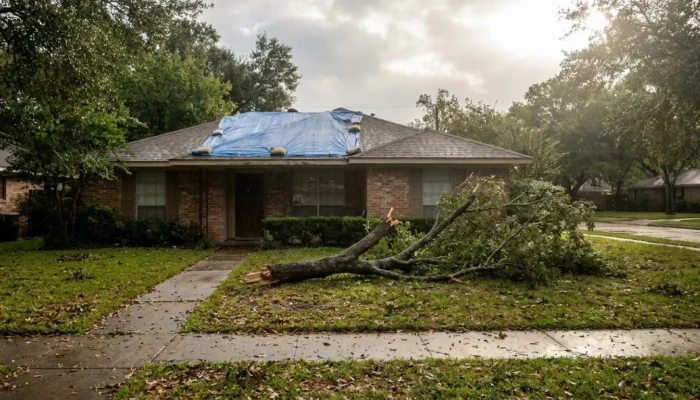
Storm Damage, Denied Claims, and the Fine Print Houston Homeowners Overlook
Key Takeaways: An "act of God" clause refers to policy language addressing losses from natural forces such as hurricanes, hail, windstorms, floods, lightning, and earthquakes. Under Texas law, the doctrine generally applies only when a loss is caused exclusively by natural forces without contributing human negligence. Many Houston denials labeled this way may actually stem from written policy exclusions, anti-concurrent causation provisions, or wind-versus-flood causation disputes rather than the common-law doctrine itself. A storm-related explanation generally does not suspend your insurer’s obligations under Chapter 542 of the Texas Insurance Code, which requires written denial notices with reasons and imposes prompt payment deadlines backed by statutory interest and attorney’s fees. Chapter 542A adds further requirements for most weather-related claims, including pre-suit notice and a modified interest calculation. Carriers still owe a reasonable investigation, and rushed inspections or conclusory denial letters may raise unfair settlement practice concerns. Important carve-outs exist: TWIA, NFIP flood, and personal umbrella policies are excluded from the prompt payment subchapter, meaning one hurricane can trigger three claims under three rulebooks. Preserving photographs, independent inspections, the full claim file, and written records, while tracking suit-limitation deadlines, can help Houston homeowners challenge a questionable denial.
An "act of God" clause addresses losses caused by natural forces such as hurricanes, hail, windstorms, floods, lightning, and earthquakes. Under Texas law, the doctrine generally refers to an event caused exclusively by natural forces, without human negligence contributing to the loss. Insurers sometimes invoke that concept to justify denying, delaying, or underpaying a claim. Understanding what the clause actually says, and what Texas law may still require of your insurer, can affect the outcome of a disputed claim.
If your carrier denied a Houston claim by pointing to storm or natural-disaster language, you do not have to accept that answer at face value. The policyholder attorneys at Fitts Law Firm, PLLC review denial letters, policy provisions, and adjuster reports for homeowners across the Houston area. Call 713-871-1670 or contact us now to discuss your situation.
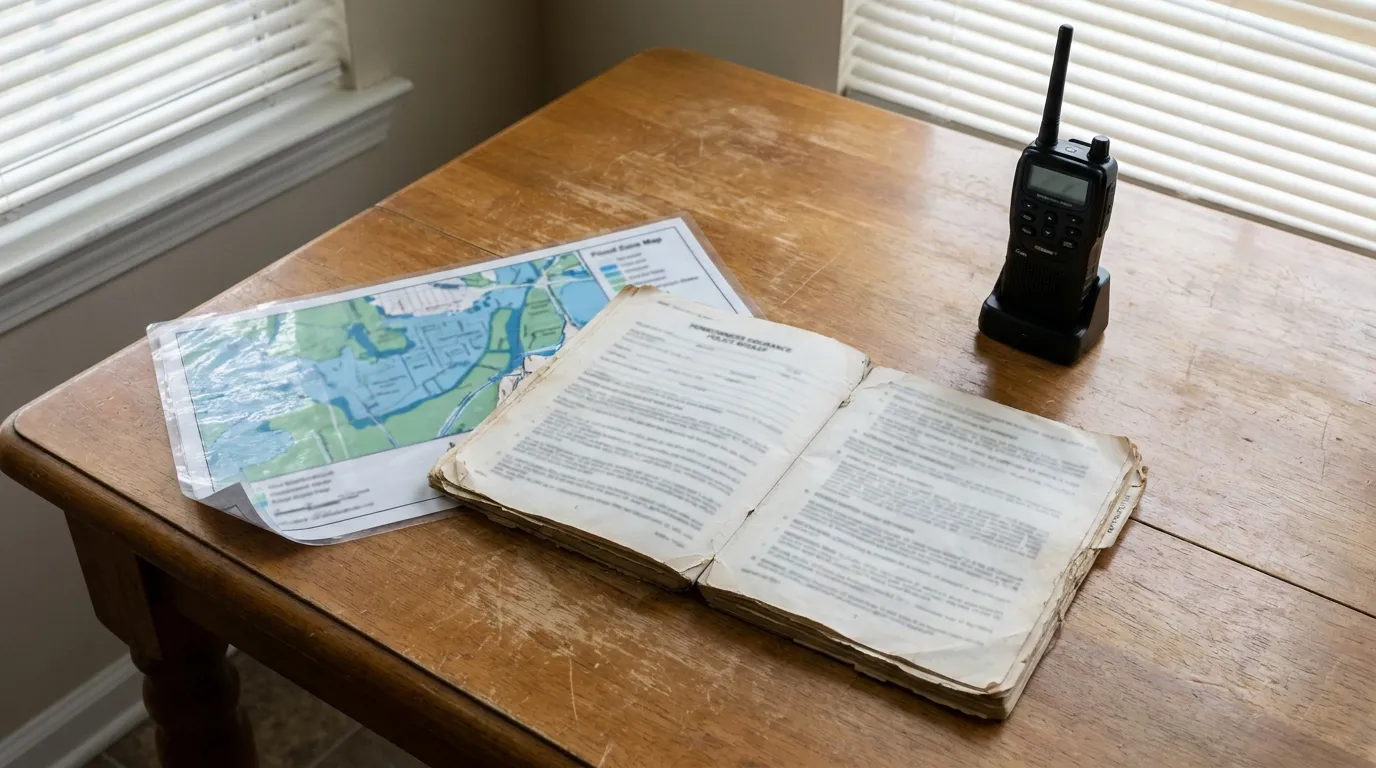
What the Act of God Definition in Insurance Actually Means
Texas courts developed the "act of God" doctrine long before it appeared in modern property policies. Courts historically applied it in liability contexts to excuse responsibility for damage caused by unforeseeable natural events such as storms and floods. The act of God doctrine in Texas has been analyzed by Texas legal commentators, including a San Antonio law school examining how state courts apply the concept.
The legal test is narrower than most homeowners assume. For an event to qualify, damage generally must result exclusively from natural causes, with no human negligence contributing to the loss. That standard can matter in Houston, where hurricane damage often involves mixed causation: aging roof components, prior unrepaired damage, contractor workmanship, or deferred maintenance alongside genuine wind and water forces.
Here is the practical takeaway. A standard Texas homeowners policy is a first-party property contract rather than a general liability policy, so the common-law "act of God" defense may not map cleanly onto a homeowners claim. What the insurer calls an "act of God" may really be a named exclusion, an anti-concurrent causation provision, or a wind-versus-flood dispute dressed in older terminology. Coverage in a first-party dispute is determined primarily by the policy’s own language, not the common-law doctrine.
How an Act of God Clause Homeowners Insurance Dispute Usually Unfolds
Many Houston disputes begin with a causation fight rather than a coverage denial. A standard residential property policy typically covers windstorm and hail (subject to endorsements, exclusions, and separate deductibles) while excluding flood, surface water, and often earth movement. After a tropical system, the adjuster or a retained engineer may attribute the loss entirely to rising water, typically excluded, rather than wind-driven rain or wind-opened building envelopes, which may be covered depending on policy wording.
Texas law anticipates this confusion and requires advance warning. Under Texas Department of Insurance requirements, an insurer whose residential policy does not cover flooding must generally provide notice stating that the policy does not cover damage from flood even if hurricane winds and rain caused the flood to occur. This is a disclosure obligation, however, and failing to deliver it does not automatically create flood coverage.
Policy exclusions, rather than the common-law doctrine, tend to do most of the work in these denials. If your denial letter cites specific numbered provisions, you may be dealing with written exclusionary language rather than a general natural-forces defense. Texas courts generally enforce anti-concurrent causation clauses as written, and under the doctrine of concurrent causes, an insured typically bears the burden of segregating damage attributable to a covered peril from an excluded one. Our overview of what a policy exclusion means walks through how these provisions commonly drive Houston claim denials.
💡 Pro Tip: Photograph roof decking, soffits, and interior water lines before any repairs. Wind-versus-flood causation is often decided by physical evidence that disappears the moment a mitigation crew arrives.
What Texas Law Still Requires After a Storm Denial
A natural-disaster explanation generally does not suspend your insurer’s statutory obligations. Chapter 542 of the Texas Insurance Code sets deadlines and requirements governing how insurers must acknowledge, investigate, and pay or deny claims. Subchapter B generally applies to policies issued by insurers authorized to do business in Texas, including homeowners policies, subject to statutory exclusions discussed below. For claims arising from forces of nature such as hurricanes, windstorms, and hail, Chapter 542A also applies and adds requirements, including a pre-suit notice letter that generally must be sent before filing suit.
Written Explanations Are Mandatory
Your insurer is generally required to put the denial in writing. Tex. Ins. Code § 542.056 generally requires an insurer to notify the claimant in writing of its acceptance or rejection of a claim, typically within 15 business days after receiving all reasonably requested items, and to state the reasons for rejection. Longer periods apply in certain circumstances, including surplus lines claims and weather-related catastrophes. A vague phone call referencing "the storm exclusion" generally does not satisfy that obligation, and the written reasons given can become central in later litigation.
Prompt Payment Deadlines and Penalties
Once a claim is accepted, the payment clock generally runs. The prompt payment of claims provisions in Subchapter B set insurer deadlines for acknowledgment, investigation, and decisions, and § 542.060 provides for statutory interest plus reasonable attorney’s fees when an insurer is liable and fails to comply. For most weather-related claims under Chapter 542A, interest is calculated at five percent above the judgment interest rate rather than the older flat 18 percent, and Chapter 542A may also limit recoverable attorney’s fees based on the amount ultimately awarded. These remedies generally require that the insurer be liable on the claim, and may apply to accepted claims simply not paid on time.
The Catastrophe Extension Houston Homeowners Should Know
Texas law recognizes that major hurricanes can legitimately slow claim handling. Under Texas Insurance Code Section 542.059, claim-handling deadlines for property insurance claims are automatically extended by an additional 15 days in the event of a weather-related catastrophe or major natural disaster as defined by the commissioner. These extensions are limited in scope and duration, but they may explain why carriers stretch timelines after a major Houston storm instead of denying claims outright.
Unfair Settlement Practices That Often Accompany These Denials
An insurer invoking storm language generally still owes you a good-faith investigation. Chapter 541 of the Texas Insurance Code identifies certain conduct as unfair settlement practices, including refusing to pay a claim without a reasonable investigation. A drive-by inspection, a desk review of satellite imagery, or a denial issued before any meaningful roof inspection may raise serious questions.
Two additional practices appear frequently in Houston denial disputes:
- Misrepresenting a material fact or policy provision relating to coverage at issue
- Failing to promptly provide a reasonable explanation of the policy basis for denying a claim
Whether any of these apply depends heavily on the specific facts of your claim file. Courts evaluate the reasonableness of an investigation case by case, and not every causation disagreement rises to a statutory violation. Texas courts have also held that an insured generally must show an injury independent of the policy benefits themselves to recover extra-contractual damages, absent limited exceptions. Still, a rushed inspection followed by a conclusory denial letter is a pattern policyholder counsel sees repeatedly after Gulf Coast storms.
Not Every Houston Homeowners Insurance Policy Follows the Same Rules
Certain specialized policies are carved out from the prompt payment subchapter. Texas law provides that the subchapter does not apply to a Texas Windstorm Insurance Association policy, a National Flood Insurance Program policy, or a personal umbrella policy. Houston-area homeowners often carry more than one of these simultaneously. TWIA claims follow their own statutory dispute process under Chapter 2210, and NFIP flood claims are governed by federal law and must generally be litigated in federal court under the Standard Flood Insurance Policy’s own deadlines.
| Coverage Type | Typical Storm Losses Addressed | Prompt Pay Subchapter Application |
|---|---|---|
| Standard residential property policy | Wind, hail, lightning, falling objects | Generally applies |
| TWIA windstorm policy | Named-storm wind and hail in designated coastal areas | Expressly excluded |
| NFIP flood policy | Rising water, storm surge, surface flooding | Expressly excluded |
| Personal umbrella policy | Excess liability, not first-party property damage | Expressly excluded |
This matters because the same hurricane may trigger three different claims under three different rulebooks. A homeowner may receive a prompt, compliant response on one claim and slow, unexplained handling on another. Identifying which policy governs which portion of the loss is one of the first steps in evaluating a denial.
Practical Steps After an Act of God Coverage Denial in Texas
Documentation often drives outcomes more than argument does. Policyholders who preserve evidence early may be better positioned to rebut an insurer-retained engineer’s causation report. Consider these steps:
- Request the complete claim file and the insurer’s engineering or adjuster reports in writing
- Obtain an independent inspection from a licensed contractor or engineer of your own choosing
- Preserve dated photographs, video, weather data, and repair estimates
- Keep a written log of every call, adjuster visit, and payment or denial communication
- Read your declarations page carefully to confirm deductibles, endorsements, and any windstorm exclusions
💡 Pro Tip: Send follow-up emails summarizing every phone conversation with your adjuster. A contemporaneous written record often carries more weight later than memory does.
Deadlines deserve particular attention, and they are not all the same. Contractual suit-limitation provisions, the Chapter 542A pre-suit notice requirement, policy conditions such as prompt notice of loss and sworn proof of loss, and the civil statute of limitations generally operate independently. Breach of contract claims in Texas ordinarily carry a four-year limitations period, but policies frequently contain shorter suit-limitation clauses, which Texas law generally will not enforce below two years. Courts generally construe tolling and discovery-rule exceptions narrowly, so waiting to act can carry real risk.
When Professional Review of Your Denial Makes Sense
Some denials are correct, and honest evaluation requires acknowledging that. If a policy plainly excludes flood and the loss was unambiguously caused by rising water with no covered wind component, the outcome may be difficult to change. Legitimate exclusions exist, and no attorney can guarantee a particular result.
Other denials may rest on incomplete investigation, misapplied policy language, or contested causation opinions. Those are the claims where a detailed policy review, independent expert evidence, and, where appropriate, litigation under Chapters 541, 542, and 542A could potentially change the picture. A Texas act of God clause attorney can assess which category your claim may fall into based on the actual documents.
Frequently Asked Questions
1. Is an "act of God" clause the same thing as a policy exclusion?
Not exactly, though the two overlap in practice. The act of God definition in insurance derives from common-law doctrine generally requiring that natural causes be the sole cause of loss, while exclusions are specific contractual provisions in your policy. In a first-party dispute, the policy language typically controls, and many modern Houston denials rely on written exclusions, with the doctrinal label serving as shorthand rather than the actual legal basis.
2. Can my insurer deny my claim just by saying a hurricane caused the damage?
Generally, no. A hurricane is a covered peril in part (wind and hail) and excluded in part (flood) under most standard policies. The insurer is generally expected to identify the policy provision supporting its position and, under § 542.056, to provide written reasons for rejecting the claim within the applicable statutory deadline.
3. What if my insurer is simply taking too long rather than denying my claim?
Delay has its own statutory framework. Chapter 542, Subchapter B governs acknowledgment, investigation, and payment deadlines, and § 542.060 provides for interest and attorney’s fees where the insurer is liable and fails to comply, with Chapter 542A modifying the interest calculation for weather-related claims. A catastrophe extension may lawfully change those timelines after a major storm.
4. Does the prompt payment law apply to my TWIA or flood policy?
Generally not in the same way. Texas law expressly excludes TWIA policies, NFIP flood policies, and personal umbrella policies from that subchapter. TWIA claims follow Chapter 2210 procedures and NFIP claims follow federal rules, which is why identifying the correct policy early is important.
5. How long do I have to challenge a denied homeowners claim in Texas?
It depends on your policy language and the claims asserted. Breach of contract claims generally carry a four-year limitations period, but policies frequently contain contractual suit-limitation clauses that shorten it, and Texas law generally does not permit shortening below two years. Chapter 542A also requires pre-suit notice before filing most weather-related claims. Because these deadlines are fact-specific and exceptions are often construed narrowly, prompt review of your documents is advisable.
Protecting Your Claim After a Houston Storm
An act of God clause homeowners insurance dispute rarely turns on the phrase itself. It generally turns on causation evidence, the precise exclusionary language in your Houston homeowners insurance policy, and whether your carrier met its statutory duties to investigate reasonably, explain its decision in writing, and pay covered claims promptly. Texas law provides meaningful protections, subject to important carve-outs for TWIA, NFIP, and umbrella coverage and the additional requirements of Chapter 542A, and outcomes always depend on the specific facts and documents involved.
If a denial letter left you with more questions than answers, a careful review of your policy and claim file is the right next step. Fitts Law Firm, PLLC represents Houston-area policyholders, never insurance companies. Call 713-871-1670 or reach out to our team to have your denied or delayed claim reviewed.
Disclaimer: This content is for informational purposes only and is not legal advice. Every case is unique, and results may vary. Consult an attorney about your specific circumstances.
