
Sworn Testimony on Your Storm Claim: What Houston Homeowners Need to Know Before They Sit Down
Key Takeaways: An examination under oath is sworn, transcribed testimony your insurer may request under your policy’s cooperation clause, usually due to a causation dispute, valuation gap, prior claims, or a late report. Preparing in advance is one of the biggest advantages a Houston homeowner has: gather your policy, proof of loss, estimates, invoices, photos, correspondence, and storm documentation, then refresh your memory from those records rather than guessing. Expect predictable question categories covering the date and cause of loss, property condition history, damage scope and valuation, communications with the carrier, and documents produced. During the examination you may generally have counsel present, request breaks, seek clarification, and object to demands beyond the policy’s cooperation obligation. Texas law also limits certain demands, such as conditioning settlement on federal income tax returns outside narrow statutory exceptions. Answer only what is asked and say you do not recall when that is true, since inaccurate guesses may later be framed as misrepresentation. If the process becomes indefinite delay, Texas’s unfair settlement practices and prompt payment provisions may offer leverage, and counsel engaged before the transcript exists is often more valuable than counsel brought in afterward.
If your insurer has demanded sworn questioning about your hail, wind, or hurricane loss, the request generally stems from your policy’s cooperation clause, and preparation can be one of your greatest advantages. A court reporter records everything, your answers are sworn, and the transcript may support a denial, coverage defense, or misrepresentation claim.
Before you agree to a date or answer a single question, talk with Fitts Law Firm, PLLC about your options. Call 713-871-1670 or reach out to our Houston office today to discuss how to respond.
Why Your Insurer Is Asking for an Examination Under Oath
Most Texas homeowners policies contain a duties-after-loss provision requiring cooperation with the insurer’s investigation, which is generally where the EUO demand originates. Depending on the form, this may include sworn questioning, producing records, and allowing inspections. Because the duty is contractual, its reach depends on your policy wording, and Texas courts generally require the insurer to show noncompliance was material or prejudicial before coverage is forfeited.
Insurers typically request sworn examinations when something in the file raises questions, a dispute over whether hail or wind caused the damage, a large gap between your contractor’s estimate and the carrier’s number, prior claims, or a delay in reporting. None of these circumstances means your claim is fraudulent; they mean the carrier wants your testimony on record.
Texas law treats sworn examinations seriously in the insurance context generally. The Insurance Code gives the Commissioner broad authority to compel testimony and document production from regulated entities. Those provisions govern regulatory examinations of insurers, not a carrier’s examination of a policyholder, so they don’t define your EUO rights directly, but they signal that sworn testimony deserves equal seriousness from you.
Building Your EUO Checklist
Effective preparation starts weeks before the examination, not the night before. The goal isn’t to memorize a script, but to refresh your genuine recollection so your answers are accurate, consistent with your written claim submissions, and free of speculation.
Assemble and Review Your Claim File
Gather every document connected to the loss and read it before you testify. Homeowners who walk in unprepared often guess at dates, figures, and details, guesses that may later look like inconsistencies. A practical collection list includes:
- Your complete policy, including endorsements and declarations pages
- The sworn proof of loss, if submitted, and any claim forms
- Contractor/roofing estimates, invoices, receipts, and repair records
- Before-and-after photographs and video of the property
- All correspondence with adjusters or the carrier
- Mortgage, maintenance, and prior claim documentation
- Weather reports or storm date information for your address
The Texas Department of Insurance publishes homeowner claim guidance describing policyholder rights and duties, including cooperation with investigations. The same document categories recommended there are generally what you should organize before an examination.
Understand the Likely Question Categories
Examinations of Houston storm claims tend to follow predictable subject areas: how you acquired and maintained the home, when and how you discovered the damage, who inspected the property, what repairs were performed, what you paid, and how you calculated your claimed loss. Questions about finances, prior claims, and household occupants also appear, though whether a specific financial inquiry falls within the cooperation clause can be disputed.
| Question Area | What Preparation Generally Involves |
|---|---|
| Date and cause of loss | Reviewing storm dates, first observation of damage, reporting timeline |
| Property condition history | Recalling prior repairs, maintenance, and earlier claims |
| Damage scope and valuation | Reconciling estimates, invoices, and payments already received |
| Communications with the carrier | Reviewing correspondence so your account matches the written record |
| Documents and records | Confirming what was produced and what remains outstanding |
Practice Answering Precisely
One of the most common mistakes is over-answering. Listen fully, answer only what was asked, and say you don’t recall when that’s true. Guessing at a figure or date can create an avoidable transcript problem. If a question is unclear, ask for clarification first.
💡 Pro Tip: Bring your own copy of every document you produced to the carrier. Being handed an exhibit you haven’t seen in months and asked to authenticate it on the spot is a needless disadvantage.
What to Expect at an EUO in Practice
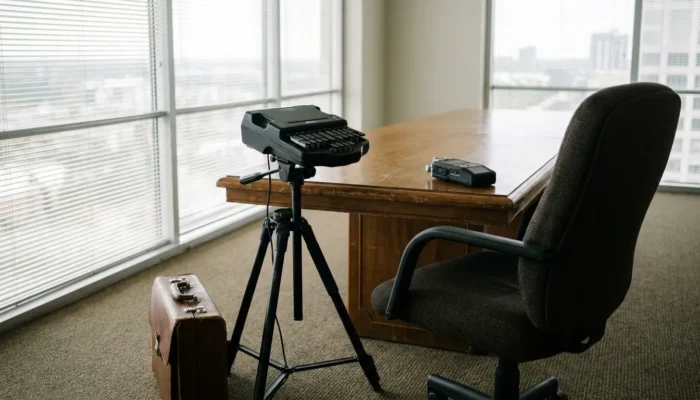
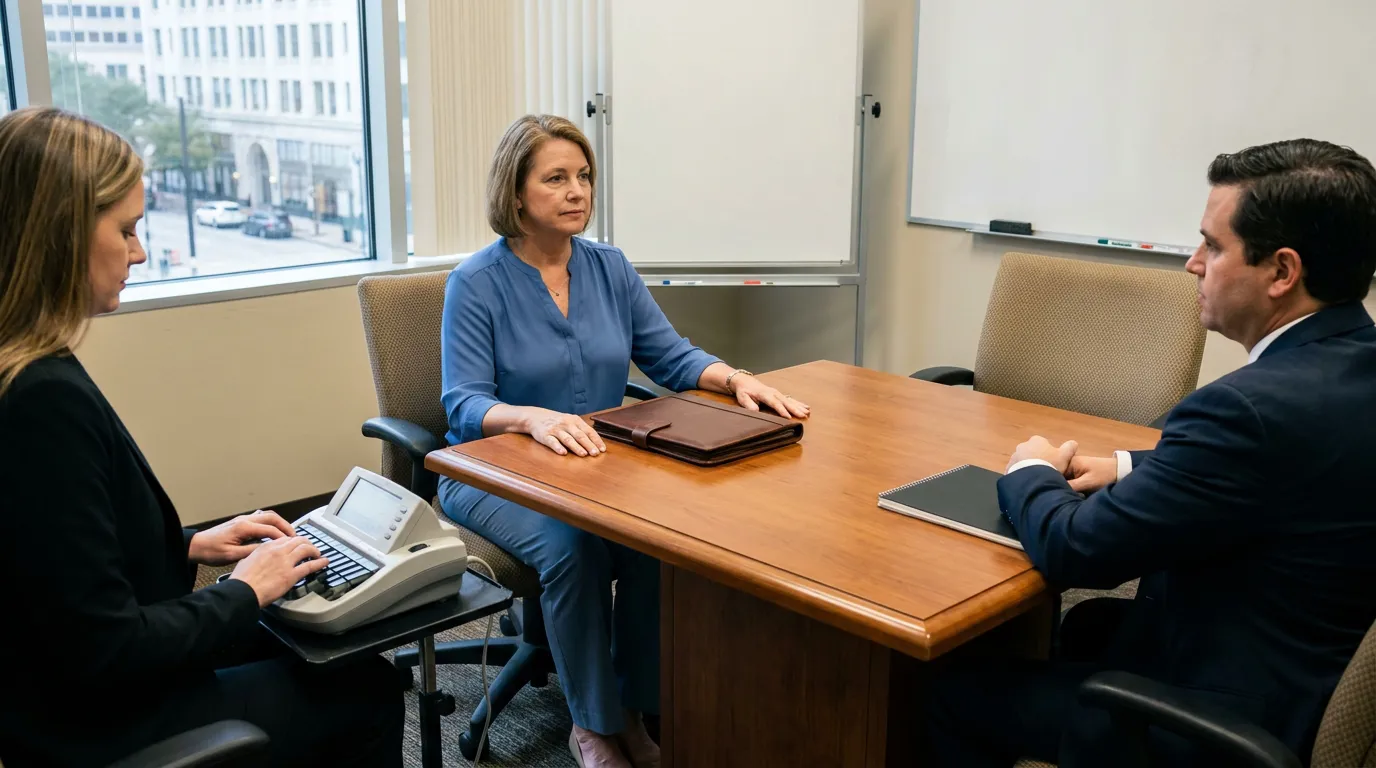
The examination is typically conducted by attorneys retained by the insurer, with a court reporter present and sometimes a video record. It may occur at a law office or remotely by videoconference. There is generally no judge, jury, or contemporaneous evidentiary rulings, so questioning may range broadly.
You retain meaningful rights even though the setting favors the carrier. You may generally have counsel present, request breaks, ask for rephrasing, and object to demands exceeding the cooperation clause’s scope. Since an EUO is contractual rather than court-supervised, objections are typically noted for the record and resolved later if litigation follows. Whether a question or request is objectionable depends on your policy language and the claim’s posture.
One document category deserves specific mention. Texas law bars insurers from requiring a federal income tax return as a condition of settlement unless the return is required by court order, the claim involves a fire loss, or it involves lost profits or income, under Tex. Ins. Code § 541.060(a)(9). This restriction, subject to those exceptions, doesn’t bar every financial records request.
Recognizing When the EUO Process Has Become a Delay Tactic
An insurer is entitled to investigate, but Texas law identifies conduct that may constitute unfair settlement practices. Under Tex. Ins. Code § 541.060(a), prohibited practices include misrepresenting a material fact or policy provision, failing to attempt in good faith a prompt, fair settlement once liability is reasonably clear, failing to promptly explain a denial, failing to timely affirm or deny coverage, and refusing to pay without a reasonable investigation. A private action under Chapter 541 generally requires actual damages caused by the conduct, and the statute imposes notice and limitations requirements. If a carrier appears to use sworn examinations to manufacture a coverage defense or stall indefinitely, the unfair settlement practices statute may provide leverage.
Delay after the examination is a recurring complaint in Houston storm files. The prompt payment provisions in Subchapter B of Chapter 542 impose deadlines for acknowledging, investigating, accepting, or rejecting claims, and for paying accepted ones, with statutory interest and attorney’s fees for violations. These deadlines can be extended in defined circumstances and vary by policy and insurer type. Gathering testimony generally doesn’t license a carrier to sit on a coverage decision indefinitely.
Bad-faith remedies stand on their own footing. A Chapter 541 action, a common-law good-faith claim where still available, and a Chapter 542 prompt payment claim are analyzed separately from a breach-of-contract claim, though Texas courts have limited extra-contractual recovery absent independent injury beyond lost policy benefits. Special statutes can also alter timing or liability in narrow settings, such as insurer delinquency proceedings.
Regulatory Complaints Are a Separate Track
Filing a regulatory complaint is not the same as filing a lawsuit, and one doesn’t substitute for the other. TDI offers homeowners a channel to report claim-handling concerns, generally online or by phone, typically requesting the policy, claim number, and correspondence. TDI cannot award damages or order payment of a disputed claim. Any statutory deadline for a civil breach-of-contract or bad-faith action runs independently of a regulatory complaint, so filing one doesn’t pause the limitations clock.
Why Counsel Before the Examination Often Matters More Than Counsel After
By the time a transcript exists, your testimony is generally fixed. A Houston home claim EUO attorney can review the policy’s cooperation language, evaluate whether the requested scope is proportionate, prepare you on substance and mechanics, and preserve objections during the examination. That work is often more valuable before questioning than after.
Understanding the purpose behind the request is the starting point. Reading a plain-language explanation of what is an Examination Under Oath in a Houston claim denial context may help you see how carriers use the transcript later.
Outcomes always depend on the specific policy, loss, and record. Nothing about a properly handled examination guarantees payment, and an EUO request doesn’t necessarily doom your claim. Homeowners facing denied, underpaid, or delayed storm losses can learn more about our approach to denied insurance claims and how sworn testimony fits into a broader recovery strategy.
💡 Pro Tip: Never sign a blank or incomplete sworn proof of loss to speed up an examination date. Sworn documents and sworn testimony are compared against each other, and inconsistencies are hard to explain later.
Frequently Asked Questions
1. Can I refuse to attend an examination under oath?
Refusing outright is generally risky. Because the cooperation clause is a contractual condition, a carrier may argue noncompliance forfeits coverage, though Texas courts generally examine whether the insurer was actually prejudiced. A better approach usually involves attending while negotiating reasonable scope, timing, and document parameters through counsel.
2. How long does an EUO on a Houston home claim usually last?
Duration varies with the loss’s complexity. Straightforward roof claims may be shorter, while large hurricane losses involving multiple contractors and prior claims may extend substantially or span multiple sessions.
3. What if I genuinely cannot remember a detail about my hurricane loss?
Saying you don’t remember is generally an acceptable, truthful answer. Guessing tends to create problems, since an inaccurate estimate given under oath may later be characterized as misrepresentation, though Texas law generally requires the insurer to show the misrepresentation was material and, often, intentional before it defeats coverage.
4. Does an EUO mean the insurer thinks I committed fraud?
Not necessarily. Carriers request sworn examinations for many reasons, including causation disputes, valuation gaps, and reporting delays. That said, the transcript may support a misrepresentation defense, which is why careful EUO preparation matters.
5. Can I bring my contractor or public adjuster with me?
Generally the examination is limited to the named insured, counsel, and the court reporter, subject to the carrier’s arrangements. Your contractor’s estimates and records can still be produced and reviewed as documents.
Putting Yourself in the Strongest Position Before You Are Sworn In
An examination under oath can be a pivotal moment in a disputed Houston property claim, and homeowners who fare better treat it that way. Read your policy, assemble your claim file, refresh your recollection with documents rather than assumptions, answer only what’s asked, and understand that Texas law may limit how a carrier uses the process. Those limits, including unfair settlement practices standards and prompt payment requirements, exist because investigation can shade into delay. Every claim turns on its own facts, and no single preparation step determines the result.
If an insurer has demanded sworn testimony on your hail, wind, or hurricane damage claim, don’t walk in unprepared. Connect with Fitts Law Firm by calling 713-871-1670 or schedule a case review now to discuss your examination and your claim.
Disclaimer: This content is for informational purposes only and is not legal advice. Every case is unique, and results may vary. Consult an attorney about your specific circumstances.
