
Why a Slow Leak Can Cost Houston Homeowners Their Entire Water Damage Claim
Key Takeaways: Texas homeowners policies typically cover sudden and accidental water losses while excluding damage from continuous or repeated seepage, which many forms measure in weeks, months, or years and some measure at 14 days or more, meaning the same broken pipe may be covered on day three and denied on day fifteen. Denials under this rule usually rest on an insurer’s duration estimate drawn from mold growth, staining, or corrosion rather than a measured start date, and those estimates are frequently contestable in Houston’s humid climate. Texas law generally places the burden of proving an exclusion on the insurer, and Tex. Ins. Code §§ 542.251, 542.253 and 544.353 address how water claims are handled, how underwriting guidelines are filed, and when prior remediated appliance-related claims may affect rating or renewal. Policyholders should read the denial letter for the exact provision cited, since many carriers concede a covered plumbing failure while excluding only the resulting damage, and some forms may still pay tear-out costs. Dated photographs, repair invoices, water bills, preserved components, and an independent causation opinion often carry significant weight in disputing the carrier’s timeline. Appraisal, a TDI complaint, or breach of contract and extra-contractual claims may remain available, but contractual suit limitation deadlines make early action important.
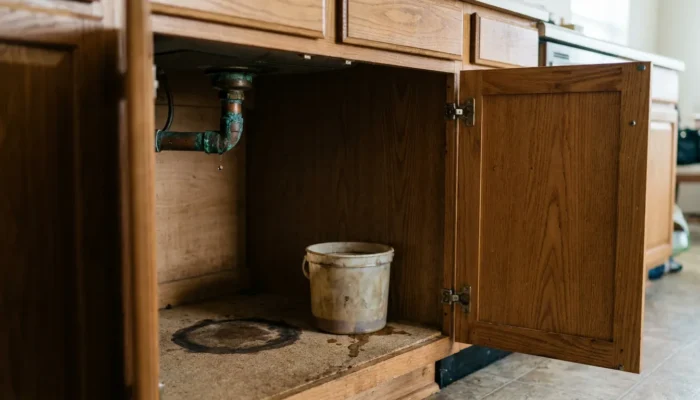
When a Houston homeowner opens a denial letter citing "continuous or repeated seepage or leakage of water over a period of 14 days or more," the carrier is generally invoking a timing-based exclusion rather than disputing that damage occurred. Most Texas residential policies cover sudden and accidental water losses but exclude damage from leaks that persisted quietly behind a wall, under a slab, or beneath a water heater pan. The same broken supply line may be fully covered on day three and excluded on day fifteen. Whether that conclusion holds up generally depends on causation evidence, the specific policy form, and how the insurer investigated the loss.
If your claim was denied under a seepage provision, Fitts Law Firm, PLLC reviews policy language, adjuster reports, and engineering findings to determine whether the denial fits the facts. Call 713-871-1670 or contact our Houston team now to discuss your options.
What the Sudden and Accidental Water Damage Exclusion Actually Says
This exclusion is often not one clause but the interaction of two. A grant of coverage typically extends to accidental discharge or overflow of water from plumbing, heating, air conditioning, or an appliance, while a companion exclusion may remove loss caused by constant or repeated seepage occurring over weeks, months, or years, with some forms substituting a defined threshold such as 14 days. Texas homeowners forms are not uniform, so the operative time frame depends on the form actually issued. Reading only the exclusion, or only the coverage grant, can produce an incomplete picture of what the contract promises.
The 14-day leak clause functions as a bright-line timing test in the insurer’s view, but Texas law generally does not treat exclusions as self-executing. Under Tex. Ins. Code § 554.002, the insurer generally bears the burden of proving that an exclusion applies, and if the insurer relies on an exception to that exclusion, the burden may shift back to the policyholder. Ambiguous exclusionary wording has historically been construed in favor of coverage under Texas contra proferentem principles, though a court will first ask whether the language is genuinely ambiguous. Texas insurance scholarship on property exclusion clauses examines how courts have handled these disputes, and outcomes remain fact-dependent.
The Discovery Problem Behind Most Denials
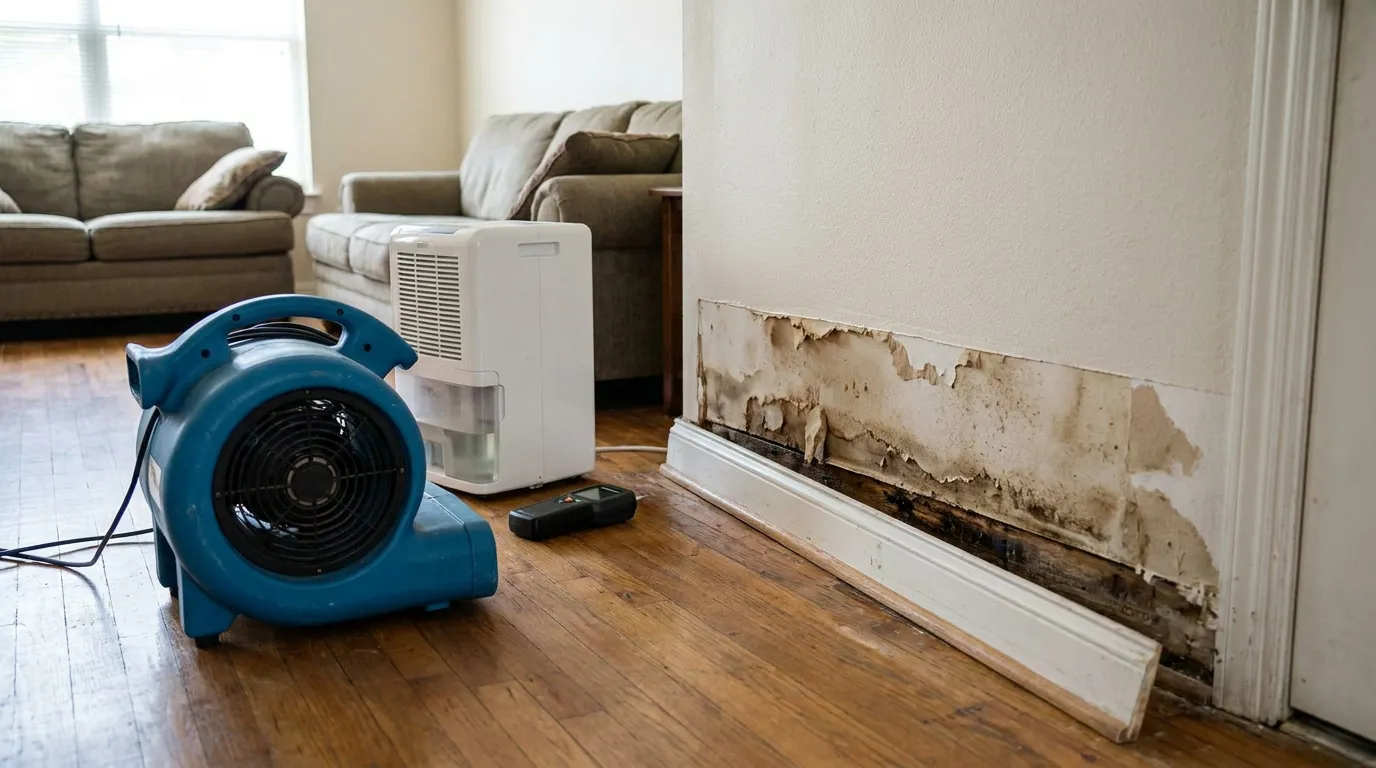
Almost no homeowner knows precisely when a hidden leak began. A pinhole in a copper line behind drywall may leak for months before a stain appears, and a slab leak often announces itself only through a warm floor or a spiking water bill. Insurers frequently resolve that uncertainty against the policyholder by relying on moisture mapping, corrosion patterns, or mold growth to estimate duration.
Where Insurer Duration Estimates Break Down
Duration opinions are generally estimates, not measurements. Mold can develop rapidly in Houston humidity, and staining depends on ventilation, water temperature, and building materials. An independent plumber or forensic engineer may reach a materially different conclusion than an insurer-retained consultant, often the central battleground in a continuous leak denial in Houston.
How Texas Law Regulates Water Damage Claim Handling
Texas lawmakers addressed water claims directly through a dedicated subchapter of the Insurance Code. Under Tex. Ins. Code § 542.251, Subchapter F aims to provide prompt, efficient, and effective handling of water damage claims under residential policies, including mold-related losses, while reducing policyholder confusion and claim costs. That framing may help explain why time-limited seepage language exists at all. This subchapter governs claims handling; it does not itself create or eliminate coverage.
These standards target residential property claims. Tex. Ins. Code § 542.252 sets the subchapter’s applicability, and § 542.253 authorizes the commissioner to adopt rules on required notice, acceptance or rejection of a claim, claim-handling time frames, investigation requirements, and settlement, with those rules superseding the general minimum standards in Subchapter B. Review the full text of the Texas prompt payment provisions for details.
Underwriting practices are regulated as well. Tex. Ins. Code § 544.353(a) provides that underwriting guidelines relating to a water damage claim are governed by commissioner rules, and an insurer may not use a noncompliant guideline. Section 544.353(b) requires insurers to file their water damage underwriting guidelines with the department. These filings concern underwriting and rating practices rather than policy exclusion wording, which is regulated separately through form filings and approval.
Prior Claims, Repeat Losses, and Your Renewal Rights
A denied seepage claim in Texas often raises a second worry: what happens at renewal. Tex. Ins. Code § 544.353(c) provides that, except as provided by subsection (e), an insurer may not use a prior appliance-related claim to determine rates or decide whether to issue, renew, or cancel a policy if the person properly remediated the prior claim and had the remediation inspected and certified by a knowledgeable and experienced person or entity. Under TDI’s implementing rule, the inspection and certification are the consumer’s option and expense, and an uncertified claim does not receive this protection. Documentation of that certification, including TDI’s water damage repair certificate form, is often what makes the protection usable.
That protection has defined limits. Under Tex. Ins. Code § 544.353(e), subsections (c) and (d) do not apply to a person who has received payment for three or more appliance-related claims within a three-year period, or to property that has been the subject of three or more such claims in that period. This section addresses claims history in underwriting and rating; it does not require a carrier to pay a claim the policy excludes.
💡 Pro Tip: Keep remediation invoices, moisture readings, and the remediation certification in one file. If a carrier later cites your claim history, that packet may be the difference between a protected prior claim and an unprotected one.
Reading Your Denial Letter Line by Line
A denial letter should generally identify the specific policy provision relied upon. Under Tex. Ins. Code § 542.056, an insurer that rejects a claim must generally notify the policyholder in writing and state the reasons for rejection, so a vague reference to "wear and tear" or "long-term leak" without a quoted exclusion is worth questioning. Understanding what a policy exclusion is helps you evaluate whether the cited language actually reaches your loss.
Pay attention to what the letter concedes. Many denials acknowledge a covered plumbing failure occurred but exclude only the resulting damage, and some policies may still pay tear-out costs to access the failed pipe even when the water damage itself is excluded. Whether that access coverage exists, and any sublimit on it, depends on the form. Separating the excluded portion from the covered portion can change the value of the claim.
| Scenario | Common Carrier Position | Policyholder Counterpoint |
|---|---|---|
| Burst supply line found same day | Covered as sudden and accidental | Document discovery date immediately |
| Slab leak found after high water bill | Excluded as long-term leak | Bills may show a sharp, recent spike |
| Mold behind cabinet | Excluded seepage over 14 days | Humidity can accelerate growth timelines |
| Roof-related interior water | Often a separate wind or wear analysis | Causation may be storm-driven |
Building Evidence After a Houston Water Damage Denial
Evidence gathered in the first weeks tends to carry significant weight. A claim may improve when the file contains dated photographs, the plumber’s original repair invoice, water utility records, and written communications with every adjuster involved. Verbal assurances rarely help later.
Practical steps that often strengthen a disputed file include:
- Requesting the complete claim file and any engineering or moisture reports
- Obtaining an independent plumbing or forensic causation opinion
- Preserving the failed pipe, fitting, or appliance component
- Comparing water bills for the months before and after discovery
- Documenting the exact date and manner of discovery in writing
Flood exposure is generally a separate analysis entirely. Federal flood coverage responds to inundation of normally dry land from sources such as overflow of inland or tidal waters or unusual and rapid accumulation of surface waters. Guidance available when you buy a flood policy explains that, for the general surface-water prong, the event generally must affect two or more acres or two or more properties. Other prongs of the NFIP definition apply on their own terms. Gradual interior seepage generally falls outside the flood definition, which is why Houston homeowners sometimes discover a gap between two policies.
💡 Pro Tip: If an adjuster asks how long you think the leak existed, answer only with what you actually observed. Speculation recorded in a statement can become the foundation of a duration-based denial.
Options When the Carrier Will Not Move
A denial is a position, not necessarily a final judgment. Texas policyholders may invoke the policy’s appraisal provision for valuation disputes, file a complaint with the Texas Department of Insurance, or pursue breach of contract and extra-contractual claims where facts support them. Appraisal generally resolves amount-of-loss disagreements rather than pure coverage questions, and a TDI complaint is a regulatory process that does not adjudicate coverage or extend any deadline, so choosing the right path matters. Extra-contractual remedies under Chapters 541 and 542 also carry their own notice requirements and proof standards.
Deadlines deserve early attention. Contractual suit limitation provisions and statutory limitations periods can both apply. Texas law generally permits a policy to shorten the period, but not below two years for certain first-party property claims, and Texas courts generally interpret tolling and discovery-rule exceptions narrowly. Working with a sudden and accidental water damage exclusion lawyer early may help preserve remedies that could otherwise lapse.
Frequently Asked Questions
1. Does the 14-day seepage exclusion Texas language apply if I never saw the leak?
Not necessarily. The exclusion generally focuses on the duration of the leakage, not on your awareness, but the insurer still generally bears the burden of proving the excluded condition caused the loss. Hidden leak provisions in some forms may alter this analysis, so specific policy wording typically controls.
2. Can my insurer deny the plumbing repair as well as the water damage?
It depends on the form. Many Texas policies exclude the cost to repair the failed component but may cover access and tear-out expenses, sometimes subject to a sublimit, while other forms treat them differently. Reviewing the coverage grant alongside the exclusion is generally advisable before accepting a full denial.
3. Will a prior water claim make my policy non-renewable?
Under Tex. Ins. Code § 544.353(c), a properly remediated appliance-related claim that was inspected and certified as the statute requires generally may not be used against you in rating or renewal decisions. That protection generally does not extend to property or persons with three or more paid appliance-related claims in three years under § 544.353(e), and other lawful, non-claims-based underwriting grounds may still apply.
4. Is mold growth proof that a leak lasted more than 14 days?
Not necessarily. Mold timelines vary with humidity, temperature, and airflow, and Gulf Coast conditions can accelerate growth considerably. An independent assessment may rebut a carrier’s duration assumption, though the weight given to competing opinions is decided case by case.
5. How soon should I act after a denial?
Promptly. Evidence deteriorates, repairs alter the scene, and contractual suit limitation clauses can shorten the window for filing. Early review may preserve more options.
Protecting Coverage You Already Paid For
The seepage rule in a homeowners policy generally exists because insurers treat long-term water intrusion as a maintenance risk rather than a fortuitous loss, and the Texas Legislature acknowledged claim-cost concerns in Tex. Ins. Code § 542.251. That rationale does not itself entitle a carrier to assume duration without support. When the denial rests on an estimate rather than evidence, and when the policy language is susceptible to more than one reasonable reading, the outcome may look different after a thorough review. Every claim turns on its own facts, policy form, and documentation, and no outcome can be predicted or guaranteed.
If a carrier has denied or underpaid your water damage claim, the team at Fitts Law Firm, PLLC can evaluate the exclusion the insurer relied on and the evidence behind it. Call 713-871-1670 or request a claim review today to get started.
Disclaimer: This content is for informational purposes only and is not legal advice. Every case is unique, and results may vary. Consult an attorney about your specific circumstances.
