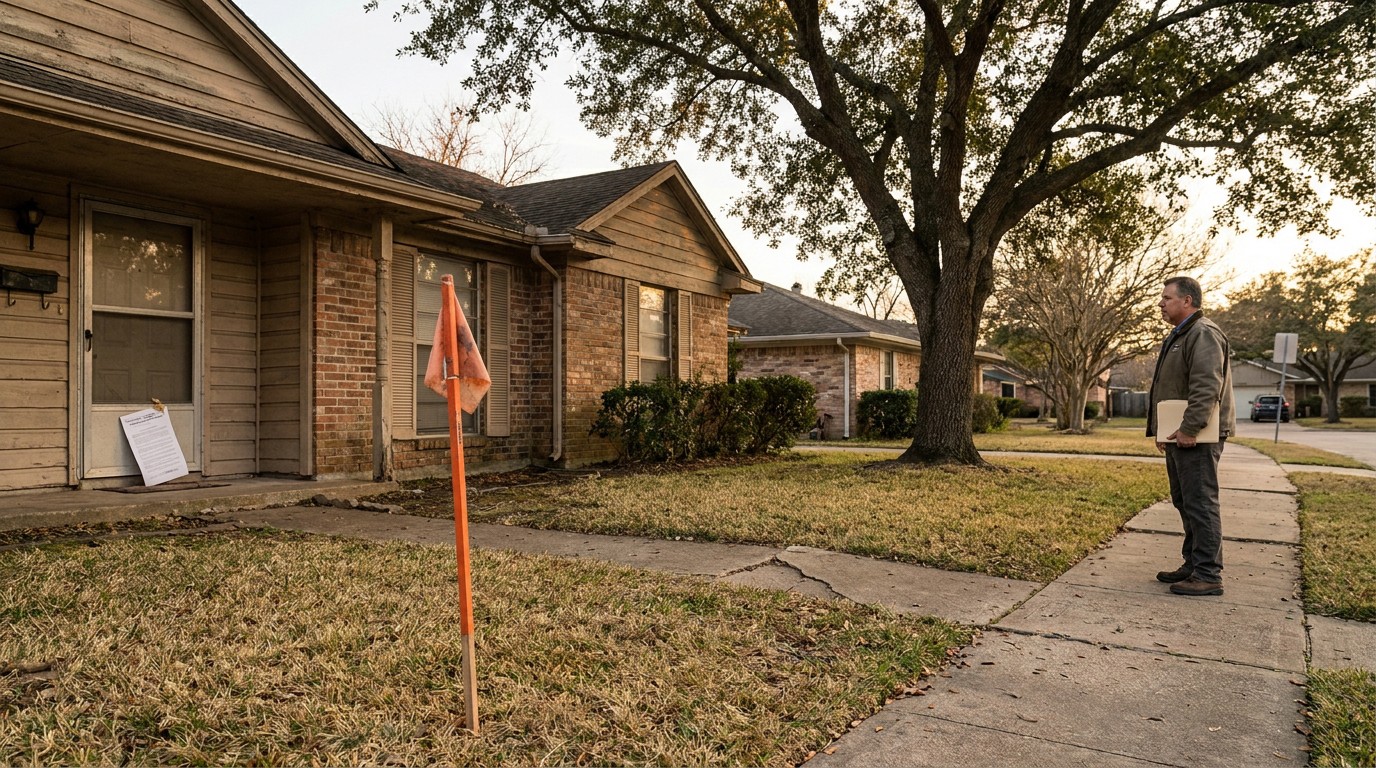
The earth movement exclusion appears in nearly every property and flood policy sold in Texas, but its scope is broader than homeowners expect. Under the National Flood Insurance Program, earth movement is excluded even if the earth movement is caused by flood. A flood can saturate the ground, the soil can shift, and the resulting structural damage may fall outside coverage entirely. When an insurer leans on this wording to refuse payment, lawyers who handle denied insurance claims in Texas start by asking how far the exclusion really reaches.
This exclusion targets structural elements most vulnerable to flooding. The NFIP identifies foundation walls, anchorage systems, and staircases as insured building property, but it also contains a separate general earth movement exclusion that bars coverage for any loss caused directly by earth movement, even if the earth movement is caused by flood. For Houston homeowners dealing with flood foundation damage, this is where disputes arise.
Some policies word the exclusion broadly enough to reach ground movement set off by human activity, such as nearby digging or construction, as well as natural causes. When flood water and shifting soil both play a part, the dispute often turns on how concurrent causation arguments work.
Commercial property owners face parallel language. Texas special form commercial policies cover most causes of loss except those specifically listed, typically excluding floods, earth movement, war, nuclear disaster, wear and tear, and insects or vermin. The overlap between flood and earth movement exclusions can leave business owners doubly exposed.
What Counts as Earth Movement
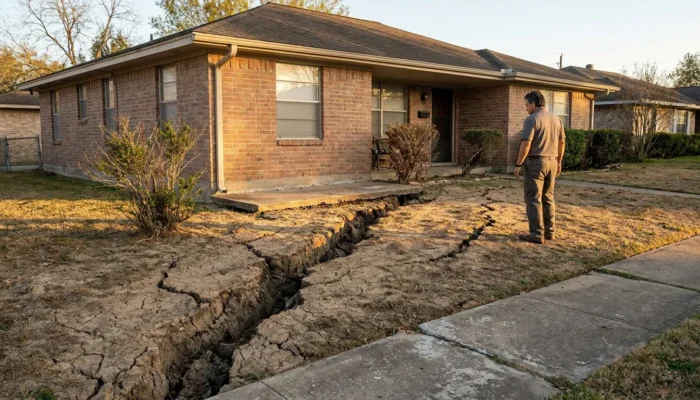
The earth movement exclusion is a policy provision that allows insurers to deny coverage for damage caused by shifting, sinking, or settling soil, even when a flood triggered that movement. Wording differs from one policy to the next, but this kind of language is often written to reach events such as:
- Settling or sinking of the ground beneath a slab or pier-and-beam foundation
- Clay soil that shrinks as it dries out and swells as it soaks up water
- Soil washed away or eroded by heavy rain or rising water
- Landslides, mudflows, and sinkholes
- Earthquakes and other ground tremors
In Houston, where expansive clay soils and frequent storms create foundation problems, this exclusion becomes one of the most common reasons valid claims get reduced or rejected. When an adjuster labels foundation cracks, slab heaving, or soil settlement as “earth movement,” the result can be a denied or underpaid flood insurance claim that leaves homeowners covering repairs out of pocket.
In practice, the label an adjuster picks can matter as much as the event itself. The same crack in a slab may be called flood damage in one report and soil movement in another, and that choice decides whether the exclusion comes into play at all. Doors that stick after a flood, diagonal cracks near door frames, gaps where walls meet ceilings, and floors that suddenly slope are the kinds of signs that tend to draw an earth movement label.
Timing is part of the picture too. Damage that shows up right after water entered the home can point toward the flood, while cracking that built up slowly over years can point toward ordinary settling. If your insurer paid only part of the loss after labeling it this way, these steps for an underpaid flood insurance claim can help you organize a response.
How Courts and Reviewers Apply the Exclusion
Courts and claim reviewers do not treat the earth movement exclusion as automatic. Their decisions tend to turn on two questions: what the policy actually says, and what the evidence shows caused the damage. The same exclusion can hold up in one dispute and fail in the next because the wording or the facts differ.
When the Exclusion Holds
An insurer stands on firmer ground when the policy language plainly covers the kind of movement involved and a qualified engineer ties the damage to soil conditions after a real, on-site inspection. Clear wording backed by a documented cause leaves a reviewer little room to decide the other way, which is why the insurer’s file matters so much.
When It Falls Short
The exclusion loses force when the wording is unclear, when the insurer’s report rests on assumptions instead of site work, or when the evidence shows a covered cause did the damage. A report that never explains why soil movement, rather than the water itself, caused the loss is open to challenge. Where a covered cause and ground movement both contributed, the policy’s exact wording about combined causes often decides how much of the loss gets paid.
Reviewers also look at the order of events. Damage documented right after the water receded, in a home with no history of earlier cracking, reads very differently from damage that photos show was already there before the storm. Like other policy exclusions that lead to claim denials, this one is only as strong as the facts behind it, so past rulings on one property are a rough guide at best to how a new claim will come out.
Challenging an Earth Movement Denial
Not every earth movement denial holds up, and Texas law gives policyholders meaningful tools to challenge improper use of the exclusion. An insurer cannot simply attach the “earth movement” label to avoid paying. Under Texas Insurance Code Section 541.060(a)(7), it is an unfair settlement practice to refuse to pay a claim without conducting a reasonable investigation. An adjuster who classifies damage as earth movement without thorough, site-specific inspection may be acting outside the law.
Misrepresenting policy coverage is also prohibited. Under Texas Insurance Code Section 541.060(a)(1), it is an unfair settlement practice to misrepresent a material fact or policy provision relating to coverage. If your insurer overstated the earth movement exclusion to justify a low payout, that may form the basis of a claim.
Insurers also carry a duty to act in good faith. Under Texas Insurance Code Section 541.060(a)(2)-(3), insurers must attempt in good faith to effectuate a prompt, fair, and equitable settlement once liability has become reasonably clear, and must promptly provide a reasonable explanation for any denial. You can review the full Texas unfair settlement practices statute to understand these protections. These provisions give Houston homeowners a path to dispute an exclusion used as a pretext.
Under Texas Insurance Code Section 2002.103(c), an insurer that issues or renews a property policy without flood coverage must include a conspicuous written statement warning that the policy does not cover flood damage even if hurricane winds and rain caused the flood. Under Texas Insurance Code Section 2002.103(e), an insurer’s failure to comply does not invalidate any exclusion in a policy.
An NFIP policy changes the playing field. Federal flood policies are not governed by the same state consumer-protection rules because federal law preempts state law for NFIP policies. Policyholders disputing an earth movement exclusion denial under an NFIP policy must navigate federal, not state, appeals and dispute processes. For an NFIP flood claim, you must submit a signed and sworn proof of loss form within sixty days of the loss. That route is laid out step by step in our guide to how to appeal a flood claim denial.
Knowing which set of rules applies is essential. The attorneys at Fitts Law Firm bring over one hundred years of combined experience to sorting out which rules and arguments fit a particular policy.
Before accepting an “earth movement” denial, ask your insurer in writing to identify the exact policy language and specific evidence supporting its causation finding. A vague reference to “soil movement” is not documented engineering evidence. Independent evidence matters. A licensed engineer’s report distinguishing flood-driven damage from pre-existing soil settlement can be the difference between a denied claim and a fair payout. If the insurer’s case rests on its own engineer, see how homeowners go about disputing an insurer’s engineering report.
Talk With Fitts Law Firm
Our team can explain your options and next steps. Contact Fitts Law Firm for a consultation.