
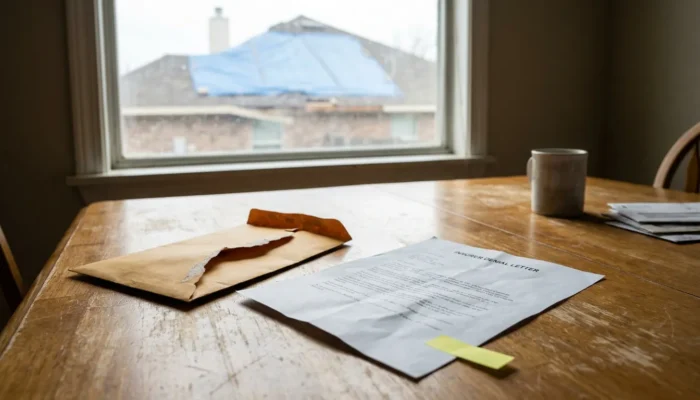
A Texas Denial Letter Must Explain More Than "No"
Key Takeaways: A Texas property insurance claim denial letter must be in writing, sent on time, and must state the reasons the claim was rejected. Under Texas Insurance Code § 542.056, insurers generally must accept or reject a claim within 15 business days of receiving all required items. If the insurer tells the claimant within that period why it needs more time, the deadline becomes the 45th day after that notice. If the insurer has reason to believe the loss resulted from arson, the deadline is 30 days. Section 541.060(a)(3) also requires a prompt, reasonable explanation of the basis in the policy, in relation to the facts or applicable law, so a bare "not covered" may fall short. Red flags include misquoted policy language, inadequate inspections, generic boilerplate, and long periods with no coverage decision. Homeowners should compare the letter against their full policy and evidence, keep a detailed claim log, and consider legal help when a denial is vague, late, or contradicts their evidence.
A Texas property insurance claim denial letter generally has to be in writing, arrive on time, and state the reasons for the rejection. Under Texas Insurance Code § 542.056(a), an insurer generally must notify a claimant in writing of its acceptance or rejection no later than the 15th business day after it receives all the items, statements, and forms it required to secure final proof of loss. If the insurer rejects the claim, § 542.056(c) requires the notice to state the reasons. Texas Insurance Code § 541.060(a)(3) adds that the insurer must promptly give the policyholder a reasonable explanation of the basis in the policy, in relation to the facts or applicable law, for the denial. A letter that only says "not covered" may fall short.
If your insurer denied, underpaid, or delayed your homeowner’s claim after a Houston storm, you can get help reviewing the letter. Fitts Law Firm, PLLC helps Texas policyholders compare an insurer’s denial against the law and the policy wording. Call 713-871-1670 or contact us now to talk about your claim.

The Core Legal Requirements Every Denial Must Meet
Two chapters of the Texas Insurance Code set the main rules for what a denial letter must contain and when it must arrive. Chapter 542, Subchapter B, often called the Prompt Payment of Claims Act, controls timing and the duty to give reasons. Chapter 541 prohibits unfair settlement practices, including failing to give a reasonable explanation and misrepresenting policy provisions.
Written Notice, Not a Phone Call
A Texas insurer generally must give its decision on a first-party property claim in writing. Section 542.056(a) refers to written notice of acceptance or rejection. An adjuster’s phone call saying "we’re denying this" generally does not, standing alone, meet that duty. If you were told about a denial only by phone, write down the date, the caller’s name, and what they said. Then ask for the decision in writing.
Stated Reasons for Rejection
The reasons for rejection generally have to be in the notice itself. Under the Texas Prompt Payment Act, specifically § 542.056(c), a rejection notice must state why the claim was rejected. Often, insurers give a reason but leave out the policy language or facts behind it, which may raise issues under Chapter 541.
A Reasonable Explanation Tied to the Policy
Chapter 541 asks for more than a bare reason. Section 541.060(a)(3) treats it as an unfair or deceptive act if the insurer fails to promptly provide a reasonable explanation of the basis in the policy, in relation to the facts or applicable law, for denying a claim. The same rule covers an offer of a compromise settlement. In practice, a compliant letter generally:
- Identifies the specific policy provision, exclusion, or condition the insurer relies on
- Explains how the facts of your loss (for example, hail versus wear and tear) trigger that provision
- Addresses the applicable law where relevant
- Arrives promptly rather than months after the investigation ends
💡 Pro Tip: Ask your insurer for a certified copy of your full policy, including all endorsements. A denial letter may quote an exclusion that was changed by an endorsement.
Deadlines That Shape When Your Denial Letter Should Arrive
Timing is part of what makes a denial lawful in Texas. The 15-business-day clock in § 542.056(a) generally starts once the insurer has received everything it asked for to secure final proof of loss. Several variations can change that deadline.
| Situation | Deadline Under Tex. Ins. Code § 542.056 |
|---|---|
| Standard claim decision | 15 business days after receiving all required items |
| Insurer needs more time | Must notify you of reasons within the same period, then decide within 45 days of that notice (§ 542.056(d)) |
| Reason to believe the loss resulted from arson | 30 days after receiving all required items (§ 542.056(b)) |
If the insurer cannot decide in time, it generally must tell you why within that same window. Compare these dates against your own timeline of emails, inspection dates, and document submissions. Whether a deadline was missed often depends on when the insurer actually received the last requested item, which can be disputed.
Coverage Limbo Can Be Its Own Problem
Insurers also must affirm or deny coverage, or send a reservation of rights, within a reasonable time. Section 541.060(a)(4) makes failing to do so an unfair settlement practice. A homeowner left waiting for months without a clear answer may have grounds to raise this issue.
Red Flags in a Property Insurance Claim Denial Letter
A denial letter can be technically on time and still raise legal concerns. Section 541.060(a)(1) prohibits misrepresenting a material fact or policy provision relating to the coverage at issue. Section 541.060(a)(7) prohibits refusing to pay a claim without conducting a reasonable investigation. Watch for warning signs like these:
- The letter quotes policy language that does not match your actual policy
- The denial relies on an engineer’s report from a short or partial inspection
- The letter cites "wear and tear" or "pre-existing damage" without describing what was examined
- The explanation is generic boilerplate that could apply to any claim
Texas law also requires good faith once liability is reasonably clear. Under the Texas unfair settlement practices statute, § 541.060(a)(2)(A) makes it an unfair practice to fail to attempt in good faith to settle a claim promptly, fairly, and equitably once liability has become reasonably clear. Whether liability was "reasonably clear" is often contested, and a good-faith dispute over coverage or the amount of the loss is generally not, by itself, bad faith. Independent evidence, such as your own contractor’s estimate or an engineer’s findings, can matter a great deal.
💡 Pro Tip: Respond to a denial in writing and ask the insurer to identify every document, photo, and report it relied on. Its answer, or failure to answer, becomes part of your claim record.
How Administrative Rules Fit Into the Picture
Texas Department of Insurance regulations add detail to these statutory duties. The department adopts claims-handling rules in Title 28 of the Texas Administrative Code, including Chapter 21 provisions on unfair claim settlement practices. These rules carry out the Insurance Code and do not override it. A complaint to the Texas Department of Insurance is an administrative process separate from a civil lawsuit, and it generally does not pause any filing deadline.
Deadlines for Taking Legal Action
Civil claims based on a denial are subject to statutes of limitations and possible contractual deadlines in your policy. For example, Chapter 541 claims generally must be brought within two years. Policies may shorten the four-year breach-of-contract period, but generally not to less than two years. Pre-suit notice requirements may also apply: Chapter 541 and Chapter 542A (for many weather-related claims) generally require written notice at least 61 days before filing suit.
💡 Pro Tip: Keep a single claim log with every date, document submission, and adjuster conversation. It is often the quickest way to show whether the Chapter 542 deadlines were met.
What Houston Homeowners Can Do After a Denial
Start by putting the denial letter side by side with your policy and your own evidence. Check whether the reasons for rejection match the policy wording and whether the insurer actually inspected the damage it described. If you are unsure what a denial means in practice, this overview of denied homeowner claims in Texas explains the basics. Gather photos, repair estimates, and weather data from the date of loss.
Getting legal help can make sense when the letter is vague, late, or contradicts your evidence. A property insurance claim denial letter lawyer can review whether the insurer’s explanation satisfies Chapters 541 and 542 and whether breach-of-contract or bad-faith remedies may apply. Results depend on the specific facts, the policy, and the evidence.
Frequently Asked Questions
1. Can my insurer deny my claim over the phone?
A phone call alone generally does not meet the written-notice duty in § 542.056(a). Ask for the decision in writing and keep notes of the call.
2. What if my denial letter doesn’t cite any policy language?
Section 541.060(a)(3) generally requires a reasonable explanation of the basis in the policy for the denial. A letter that leaves out the provision relied on may not meet that standard.
3. Does a partial payment count as a denial?
Not necessarily. However, an offer of a compromise settlement also generally requires a reasonable explanation under § 541.060(a)(3), so an underpayment letter can be measured against the same standard.
4. How long does my insurer have to decide?
Generally, 15 business days after it receives all required items. If it tells you within that period why it needs more time, it must decide within 45 days of that notice. If it has reason to believe the loss resulted from arson, it has 30 days.
5. Is a TDI complaint the same as a lawsuit?
No. A Texas Department of Insurance complaint is an administrative process. It is separate from a civil lawsuit and generally does not stop legal deadlines from running.
Holding Your Insurer to Texas Standards
Texas law generally requires a denial letter to be in writing, sent on time, and grounded in specific reasons tied to your policy, the facts, and the law. Chapter 542 sets the timing and the duty to state reasons. Chapter 541 prohibits failing to reasonably explain a denial, misrepresentations, inadequate investigations, and failing to settle in good faith once liability is reasonably clear.
If your denial letter leaves you with more questions than answers, you do not have to sort it out alone. Fitts Law Firm, PLLC works with Houston-area homeowners whose property claims were denied, delayed, or underpaid. Call 713-871-1670 or schedule a consultation to discuss your options.
Disclaimer: This content is for informational purposes only and is not legal advice. Every case is unique, and results may vary. Consult an attorney about your specific circumstances.
