
Why Your Insurance Check Is Smaller Than the Estimate
Key Takeaways: Recoverable depreciation is the portion of a Houston homeowner’s replacement cost claim that the insurer withholds from the first payment and generally releases only after repairs are completed and documented. Replacement cost policies typically pay in two stages: an initial actual cash value payment (replacement cost minus depreciation, with the deductible applied), followed by the depreciation holdback. Texas Insurance Code Chapter 707 requires policyholders to pay their deductible and permits insurers to withhold the holdback until they receive reasonable proof the deductible was paid, including a canceled check, credit card statement, or financing contract. TWIA policyholders insured at 80 percent or more of full replacement cost may receive full repair costs without any depreciation deduction under § 2210.207, though TWIA coverage applies only in the designated catastrophe area, which includes just a small portion of Harris County. Not all depreciation is recoverable, so reviewing your declarations page, endorsements, and itemized statement of loss is essential. Disputes commonly involve excessive depreciation, refusal to release the holdback, or scope disagreements, and may be addressed through an independent estimate, appraisal, or legal action.
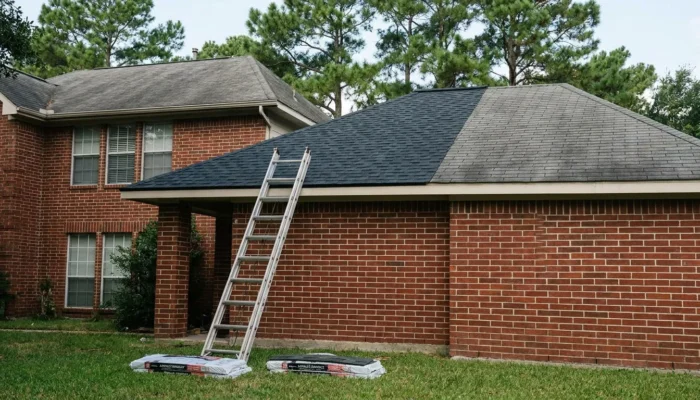
Recoverable depreciation is the portion of your claim payment your insurer generally holds back until you finish repairs and provide the required proof. If a Houston adjuster estimated $30,000 to replace your storm-damaged roof but the first check was only $19,000, the difference likely reflects depreciation withheld under a replacement cost policy, plus your deductible. That money isn’t necessarily lost, it may become payable once you complete the work and submit the required documentation.
If your carrier has withheld depreciation and now refuses to release it, the team at Fitts Law Firm, PLLC can review your policy and claim file. Call 713-871-1670 or contact our office today to discuss your options.
How a Replacement Cost Policy Splits Your Payment in Two
Most Texas homeowners policies written on a replacement cost basis pay claims in two stages. The first payment reflects actual cash value, replacement cost reduced by depreciation for age, wear, and condition, with the deductible then subtracted. The second payment, the depreciation holdback, is generally released after you repair or replace the property and submit proof.
This structure explains why many Harris County policyholders feel shortchanged after a hailstorm. The initial ACV payment can look far too small compared to a contractor’s bid, but it’s often incomplete rather than wrong, since the balance sits in the recoverable depreciation line item.
Not all depreciation is recoverable, and that distinction matters. If your policy insures a roof or other components on an actual cash value basis, or contains a roof payment schedule endorsement, the depreciation may be non-recoverable and permanently deducted. Reviewing your declarations page and endorsements is the most reliable way to determine which category applies.
Reading the Statement of Loss Line by Line
Your adjuster’s estimate should itemize replacement cost value, depreciation, the deductible, and the net ACV payment. Request a full itemized estimate rather than a summary page, and look for a column labeled "Depreciation" confirming whether it’s marked recoverable.
Common problems include excessive depreciation percentages, depreciated labor costs, and missing line items for code-required upgrades, all of which can shrink the ACV payment beyond what the policy supports. Documenting these concerns in writing creates a record if a dispute develops later.
The Texas Statutory Framework Behind Depreciation Holdbacks
Texas Insurance Code Chapter 707, Payment of Insurance Deductible, is the statute most often invoked when a carrier withholds recoverable depreciation. It requires policyholders to pay any deductible applicable to a first-party claim and sets out when an insurer may condition payment of a replacement cost holdback on proof of that payment. Chapter 707 doesn’t dictate how depreciation is calculated; how ACV is determined generally turns on the policy form, TDI requirements, and case law. Even so, homeowners can request a complete itemized estimate showing how the withheld amount was determined rather than accepting an unexplained lump-sum reduction.
Chapter 707 also conditions payment of the holdback on one specific homeowner obligation. Texas Insurance Code § 707.004 provides that "an insurer that issues a property insurance policy with replacement cost coverage may refuse to pay a claim for withheld recoverable depreciation or a replacement cost holdback under the policy until the insurer receives reasonable proof of payment by the policyholder of any deductible applicable to the claim." The Texas replacement cost coverage statute applies statewide, though application can depend on the policy and facts involved.
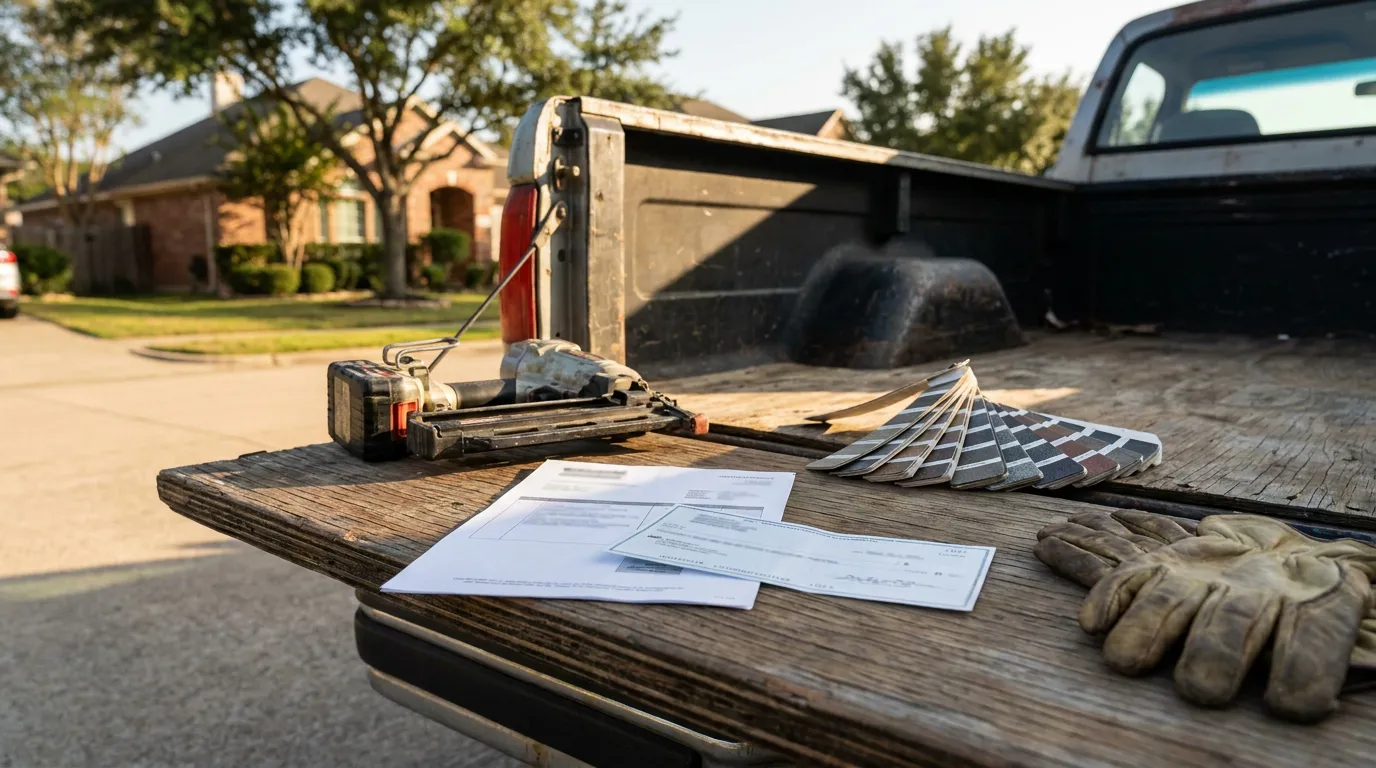
The statute also identifies examples of reasonable proof of deductible payment. Under § 707.004, this "includes a canceled check, money order receipt, credit card statement, or copy of an executed installment plan contract or other financing arrangement that requires full payment of the deductible over time." This provision, added by the 86th Legislature, took effect September 1, 2019, and because the list is inclusive rather than exclusive, a financed deductible may satisfy the requirement under certain circumstances.
💡 Pro Tip: Keep every canceled check, card statement, and signed financing contract related to your deductible in one folder. These documents are frequently the gatekeeper for releasing your depreciation holdback.
Windstorm Policies and the 80 Percent Replacement Cost Rule
Homeowners with Texas Windstorm Insurance Association coverage face a different depreciation analysis. TWIA is the state’s insurer of last resort for wind and hail damage in the Commissioner-designated catastrophe area, which includes the 14 first-tier coastal counties and only a limited part of Harris County, property inside the city limits of La Porte, Morgan’s Point, Pasadena, Seabrook, or Shoreacres and east of Highway 146. Most Houston-area homeowners instead carry wind and hail coverage under a standard homeowners policy. For those who do hold TWIA coverage, its claims materials explain that the initial payment reflects ACV and that additional recoverable depreciation may be issued upon repair completion.
The governing statute creates a meaningful advantage for adequately insured properties. Texas Insurance Code § 2210.207(c) provides that if, on the effective date of an association policy, total insurance on a dwelling "is equal to 80 percent or more of the full replacement cost of the dwelling or equal to the maximum amount of insurance otherwise available through the association, coverage applicable to the dwelling under the policy is extended to include the full cost of repair or replacement, without a deduction for depreciation." That extension remains subject to the policy’s limits, deductible, and other conditions.
Falling below that threshold changes the math significantly. Under § 2210.207(d), if total insurance on a dwelling "is equal to less than 80 percent of the full replacement cost of the dwelling and less than the maximum amount of insurance available through the association, liability for loss under the policy may not exceed the replacement cost of the part of the dwelling that is damaged or destroyed, less depreciation." TWIA’s published guidance on factors impacting claim payments identifies coverage type, depreciation, and the deductible as the key variables driving what an insured actually receives.
| Payment Concept | What It Represents | When It Is Paid |
|---|---|---|
| Replacement Cost Value (RCV) | Full cost to repair or replace with like kind and quality | Total potential claim value |
| Actual Cash Value (ACV) | RCV minus depreciation, with the deductible then applied | Initial claim payment |
| Recoverable Depreciation | The withheld difference between RCV and ACV | After repairs and required proof |
| Non-Recoverable Depreciation | Depreciation permanently deducted under policy terms | Not released under the policy terms |
Steps That Typically Unlock the Holdback
Releasing withheld depreciation usually requires a documented paper trail rather than a phone call. Requirements vary by policy and carrier, but homeowners generally strengthen their position by assembling:
- Final invoices from licensed contractors showing work actually performed
- Proof of deductible payment consistent with § 707.004
- Before-and-after photographs of the damaged and repaired areas
- Written confirmation of any supplemental damage discovered during repairs
- A dated written request for release of the depreciation holdback
Timing also matters. Many replacement cost provisions require repairs to be completed within a defined period after the loss, and missing that window can jeopardize the holdback, though some policies allow extensions on request. Reviewing those deadlines early is wiser than discovering them after a contractor delay.
When a Recoverable Depreciation Homeowners Claim Texas Dispute Escalates
Disputes over depreciation typically fall into three categories: excessive depreciation, wrongful refusal to release the holdback, and disagreement over the scope of repair. Each may require a different response. Excessive depreciation often calls for an independent estimate rebutting the carrier’s figures, while a refusal to release funds after documented repairs may raise breach of contract and prompt payment concerns.
Texas policyholders also have rights regarding claim handling timelines. Guidance on insurance legal rights in Texas outlines the prompt payment provisions of Insurance Code Chapter 542 and insurer response deadlines that apply to property claims. How those deadlines apply to a depreciation holdback is fact-dependent, and certain claims are subject to the pre-suit notice and procedural requirements of Chapter 542A.
Many Texas policies also contain an appraisal clause as a dispute-resolution mechanism separate from litigation. When the disagreement concerns the amount of loss rather than coverage, appraisal may resolve valuation and depreciation questions, although appraisers generally cannot decide coverage or liability issues. Appraisal isn’t appropriate for every dispute, and invoking it can affect other claim rights, so the decision deserves careful analysis before you agree.
Homeowners who receive a settlement offer far below their contractor’s estimate should think carefully before signing anything. Our discussion of whether Houston homeowners should accept a lowball claim offer explains what is often at stake. If your carrier has denied the holdback outright, a recoverable depreciation homeowners claim Texas lawyer can evaluate whether the refusal is supported by the policy language.
💡 Pro Tip: Send every request for depreciation release by email or certified mail. Verbal requests are difficult to prove, and the date of your submission frequently determines whether prompt payment deadlines were triggered.
Frequently Asked Questions
1. Is recoverable depreciation the same as my deductible?
No, they are separate deductions. Your deductible is the amount you agreed to pay out of pocket on every covered loss, while recoverable depreciation reflects the value lost to age and wear on the damaged property. Both typically reduce your initial payment, but only the depreciation portion may become payable later.
2. What happens if I decide not to repair my home?
If you don’t complete repairs, the withheld depreciation generally remains unpaid. Replacement cost coverage is typically conditioned on actually repairing or replacing the property, so a homeowner who keeps the ACV payment and skips the work may forfeit the holdback. Some carriers permit recovery for partial repairs, subject to the specific policy terms.
3. Can my insurer refuse to release depreciation if I financed my deductible?
Not necessarily. Texas Insurance Code § 707.004 lists an executed installment plan contract or other financing arrangement requiring full payment of the deductible over time among the examples of reasonable proof of payment. Whether a particular arrangement satisfies the statute depends on its terms and documentation.
4. How much time do I have to act on an underpaid claim?
Deadlines vary depending on the claim and the legal theory involved. Texas property insurance disputes may be subject to contractual limitation provisions in the policy as well as statutory limitations periods, and courts generally apply exceptions such as tolling or the discovery rule narrowly. Because these deadlines can be shorter than homeowners expect, prompt review is advisable.
5. Does depreciation apply to labor as well as materials?
This remains a fact-sensitive and sometimes contested issue in Texas property claims. Carriers frequently depreciate labor costs, and policyholders often challenge that practice depending on the policy language at issue. The answer generally turns on how the specific contract defines actual cash value.
Protecting the Full Value of Your Claim Settlement in Houston
Recoverable depreciation is not a penalty, but it can become one when an insurer refuses to release funds a homeowner may be owed. Understanding your declarations page, identifying the depreciation line item, documenting completed repairs, and preserving proof of deductible payment are practical steps that can help convert a withheld balance into a payment. Texas Insurance Code Chapter 707 and, for eligible windstorm policyholders, § 2210.207 shape those rights, alongside the policy’s own replacement cost provisions. Outcomes always depend on the specific policy language and the facts of your loss.
If an insurer is stalling, underpaying, or denying your depreciation holdback, the attorneys at Fitts Law Firm, PLLC are prepared to help. Call 713-871-1670 or request a case review to discuss your Houston homeowners claim.
Disclaimer: This content is for informational purposes only and is not legal advice. Every case is unique, and results may vary. Consult an attorney about your specific circumstances.
