
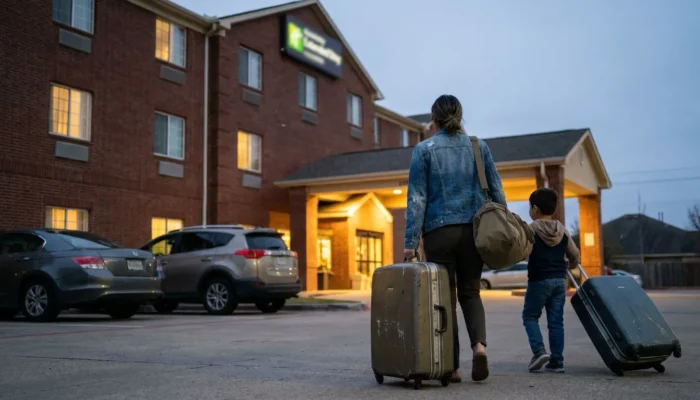
Understanding the Coverage That Pays for Somewhere Else to Live
Key Takeaways: Coverage D, or loss of use, is the part of a Houston homeowners policy that may pay additional living expenses when a covered peril makes your home unfit to live in, typically reimbursing the increase in living costs rather than every dollar spent. It often includes a second component, fair rental value, and is usually capped at a percentage of the dwelling limit with possible time restrictions and primary-residence requirements. Denials commonly rest on habitability disputes, claims that expenses were not truly additional, insufficient documentation, excluded perils such as flood, or late reporting. Texas Insurance Code § 541.060 prohibits unfair settlement practices, including failing to explain a denial, failing to investigate reasonably, or refusing to settle when liability is reasonably clear. Deadlines may come from multiple directions, including contractual limitations periods, policy provisions requiring a claim be filed within one year of the loss, and two-year statutory windows for consumer and insurance code claims. Careful documentation, independent inspections, and a written request for the specific policy provision cited are generally among the policyholder’s strongest tools after an ALE denial.
Coverage D on a Houston homeowners policy is the "loss of use" section, and it generally pays additional living expenses (ALE) when a covered loss makes your home unfit to live in. If a hurricane peels back your roof in Clear Lake or a burst pipe floods your Heights bungalow, Coverage D may reimburse hotel stays, short-term rentals, and the increase in ordinary costs you incur while displaced. Texas insurance statutes and standard policy forms treat loss of use as a recognized, separate category of coverage, distinct from dwelling or personal property protection. Yet this is also one of the coverages carriers most frequently trim, delay, or deny outright.
If your additional living expenses coverage denied letter arrived while you were still living out of a suitcase, the team at Fitts Law Firm, PLLC may be able to help you evaluate your options. Call 713-871-1670 to discuss what happened, or contact us now to request a review of your denial letter and policy language.
What Coverage D Actually Promises Under a Texas Policy
Coverage D is generally triggered by uninhabitability caused by a covered peril, not merely by inconvenience. Standard Texas homeowners forms typically divide protection into four parts: Coverage A for the dwelling, Coverage B for other structures, Coverage C for personal property, and Coverage D for loss of use. Actual policy language varies by insurer, since Texas insurers may file their own forms rather than use one mandated form. The Texas Department of Insurance publishes consumer guidance on this structure, and the Texas FAIR Plan Association, the state-created insurer of last resort, issues comparable residential forms.
For coastal windstorm coverage, Texas law requires that policies issued by the Texas Windstorm Insurance Association include coverage for wind-driven rain damage under specified conditions, loss of use, and consequential losses, subject to the association’s policy terms.
The practical measure of ALE is usually the increase in your living costs, not your total costs. If your mortgage continues and you also pay $2,800 a month for a rental in Katy, the carrier generally owes the added expense rather than every dollar you spend. Groceries, laundry, pet boarding, and extra commuting mileage may qualify, subject to the policy’s own definitions and exclusions, and only to the extent they exceed your normal pre-loss spending.
Fair Rental Value and the Second Half of Coverage D
Coverage D often contains two components: additional living expense and fair rental value. If you rented out a garage apartment that is now unlivable, the lost rental income may fall under the fair rental value portion, generally measured net of expenses that do not continue during the loss. Some forms treat these as separate sublimits while others apply a single Coverage D limit to both, and homeowners sometimes leave money unclaimed simply because they never read past the first paragraph.
Limits, Time Caps, and Primary Residence Requirements
Most loss of use policies contain ceilings, and Houston readers should find theirs before a storm hits. Many Texas forms cap Coverage D at 10 to 20 percent of the dwelling limit, and some add a time restriction such as 12 or 24 months, while others instead pay for the reasonable time required to repair or replace.
Texas law also recognizes carve-outs for the residual market. The Texas Windstorm Insurance Association, for example, is not required to provide loss of use coverage for loss of rent, loss of rental value, or additional living expenses attributable to a secondary or nonprimary residence. A summary of TFPA residential coverages illustrates how those structures are typically presented.
Why Additional Living Expenses Coverage Denied Letters Show Up After Houston Storms
Most Coverage D denials trace back to a handful of recurring insurer positions. Understanding which one applies to you may shape much of what follows, because a habitability dispute is generally proven very differently from a documentation dispute.
| Common Stated Reason | What the Carrier Is Arguing | What Often Rebuts It |
|---|---|---|
| Home was "habitable" | Damage did not render the residence unfit | Photos, code officials, mold or electrical reports |
| Expenses were not "additional" | You would have spent the money anyway | Pre-loss budget, receipts, rental comparison |
| Insufficient documentation | Receipts or proof of displacement missing | Organized ledger, dated invoices, lease |
| Underlying loss not covered | Flood, wear and tear, or excluded peril | Causation evidence from an independent engineer |
| Late reporting | Claim filed outside policy deadlines | Evidence of timely notice, or lack of prejudice to insurer |
Houston’s mixed-peril losses can create particular friction. After a hurricane, an adjuster may attribute damage to storm surge rather than wind, shifting the analysis to a separate flood policy and stranding your ALE claim between two carriers. Under Texas law, the policyholder generally bears the burden of allocating damage between covered and excluded causes, so causation evidence, rather than argument, often decides those disputes.
When a Denial May Cross Into an Unfair Settlement Practice
Texas law sets standards for how insurers must handle claims, and Coverage D is not exempt.
Under the Texas Insurance Code, it is an unfair method of competition or an unfair or deceptive act or practice to engage in unfair settlement practices such as misrepresenting a material fact or policy provision relating to coverage at issue, or failing to attempt in good faith to effectuate a prompt, fair, and equitable settlement of a claim with respect to which the insurer’s liability has become reasonably clear. These standards appear in the unfair settlement practices statute at Texas Insurance Code § 541.060.
Carriers are also generally required to explain themselves and to investigate. It is likewise an unfair settlement practice to fail to promptly provide a reasonable explanation of the basis for denial, to fail within a reasonable time to affirm or deny coverage, or to refuse to pay a claim without conducting a reasonable investigation. Whether any particular denial meets that threshold is fact-dependent, and Texas courts have generally held that a bona fide coverage dispute alone does not establish a violation. Separate prompt-payment deadlines under Chapter 542 may also apply. A one-line rejection with no policy citation may, at minimum, be worth questioning in writing.
Documentation is often the policyholder’s strongest leverage. Keep every receipt, log every phone call with the date and adjuster name, and send follow-ups by email so there is a written trail. Independent estimates and engineering reports may carry weight when a carrier’s own consultant reaches a convenient conclusion.
Deadlines That Quietly Shape a Coverage D Dispute
Timing rules in Texas may come from several directions at once, and they are not interchangeable. Breach of contract suits on an insurance policy are generally governed by a four-year limitations period, but policies themselves may shorten that. Under Texas Insurance Code § 2301.010, which applies to certain filed or department-adopted property forms, a policy form may provide a contractual limitations period for filing suit on a first-party claim, but that period may not end before the earlier of two years from the date the insurer accepts or rejects the claim, or three years from the date of the loss.
Reporting deadlines generally operate separately from suit deadlines. Under that same provision, a policy or endorsement may require that a claim be filed with the insurer no later than one year after the date of the loss. A separate statutory good-cause mechanism exists for Texas Windstorm Insurance Association policies, where the commissioner may extend the one-year claim-filing deadline, by regulation for up to 180 days, on a showing of objective facts beyond the insured’s control. Outside that context, whether a late-reported claim is barred usually turns on the policy’s notice condition and whether the insurer was prejudiced by the delay.
Statutory consumer claims carry their own clock. Actions under the Deceptive Trade Practices, Consumer Protection Act must generally be commenced within two years after the deceptive act occurred, or within two years after the consumer discovered or should have discovered it, with a limited 180-day extension where the defendant knowingly concealed facts. Claims under Chapter 541 of the Insurance Code are likewise subject to a two-year period. Discovery-based timing is not automatic, so treating the earliest possible deadline as the real one is generally the safer approach.
💡 Pro Tip: Ask your carrier in writing for the specific policy provision supporting the Coverage D denial. A written request creates a record and may reveal whether the decision rests on policy language or on an adjuster’s assumption.
Practical Steps After an ALE Denial
A denial is a position, not a final judgment, and policyholders may have several avenues. Consider the following before deadlines narrow your options:
- Request the complete claim file and the adjuster’s habitability findings in writing.
- Rebuild your expense record with dated receipts, leases, and bank statements.
- Obtain an independent inspection addressing habitability and causation.
- Compare your declarations page limits against what was actually paid.
- Review whether appraisal, if invoked, would even reach a Coverage D dispute.
Appraisal deserves particular caution. Appraisal panels typically resolve the amount of loss, not coverage or liability questions, so a carrier pushing appraisal on a denied ALE claim may not be offering the remedy it appears to offer. Chapter 542A also requires specific pre-suit notice before filing many first-party property claims. Reading more insurance claim guidance for Texans can help you recognize these patterns early.
Frequently Asked Questions
1. Does Coverage D apply if I stay with family instead of a hotel?
Possibly, though the reimbursement analysis may change. If you incur no additional lodging cost, there may be little to claim for housing, but increased food, commuting, or storage costs may still qualify depending on your policy wording.
2. How long does temporary housing coverage in Texas typically last?
It depends on your specific form. Many policies pay for the reasonable time required to repair or replace the home, sometimes bounded by a stated number of months or by the Coverage D dollar limit, whichever is reached first. Repair delays caused by the carrier itself may factor into that analysis.
3. Can my claim be denied because the damage came from flooding?
A standard homeowners policy generally excludes flood, which can affect the ALE claim built on it. If wind and water both contributed, causation evidence may become central, and concurrent-cause analysis is highly fact-specific, with the insured generally responsible for segregating covered from excluded damage.
4. Is a rental property eligible for loss of use benefits?
Coverage for nonprimary residences is frequently limited or excluded in Texas forms. Fair rental value provisions may apply to a rented portion of your own residence, but a separate investment property generally requires a landlord or dwelling policy with its own loss of rents coverage.
5. What should I do first after receiving a denial letter?
Preserve everything and note the date. The denial date may start contractual and statutory clocks, and an attorney reviewing additional living expenses coverage denied lawyer matters can assess whether the stated grounds hold up.
Bringing the Pieces Together
Coverage D is a meaningful part of a Houston homeowners policy, and it exists precisely for the weeks or months when your house cannot shelter you. Texas statutes recognize loss of use as its own coverage category, set minimum floors for contractual deadlines to challenge a denial, and prohibit specified unfair settlement practices by insurers. Outcomes, however, always depend on the particular policy language, the cause of loss, and the quality of the documentation assembled. A denial letter reflects the carrier’s view of those facts, not necessarily the correct one.
If your temporary housing benefits were cut off or refused, Fitts Law Firm, PLLC is available to review your situation and explain the options that may remain. Call 713-871-1670 or schedule a consultation before contractual or statutory deadlines limit what you can pursue.
Disclaimer: This content is for informational purposes only and is not legal advice. Every case is unique, and results may vary. Consult an attorney about your specific circumstances.
