
Understanding Why Insurers Cite "Earth Movement" After Houston Floods
Key Takeaways: The earth movement exclusion lets insurers deny coverage for damage from shifting, sinking, or settling soil, even when flood caused that movement. In Houston’s expansive clay soils, it’s a leading reason valid flood claims get reduced or denied, often affecting foundations, slabs, and anchorage systems. The exclusion appears in nearly every Texas property and NFIP policy, yet Texas law requires insurers to investigate reasonably, avoid misrepresenting coverage, and settle in good faith. NFIP disputes proceed through federal processes, with coverage capped at $250,000 for structure and $100,000 for contents at Actual Cash Value, plus a strict 60-day proof-of-loss deadline. Thorough documentation and independent engineering evidence on causation are essential to protecting your recovery.
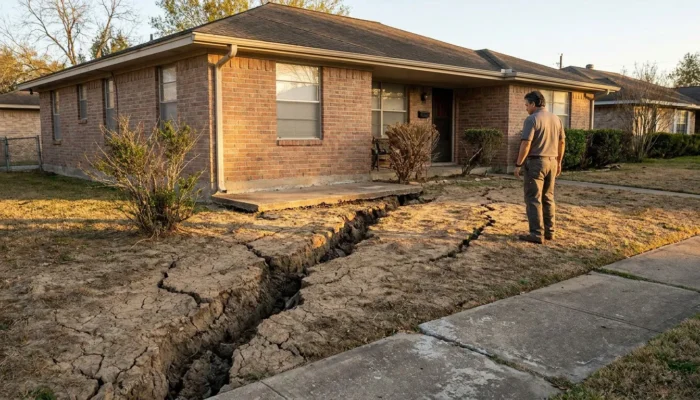
The earth movement exclusion is a policy provision that allows insurers to deny coverage for damage caused by shifting, sinking, or settling soil, even when a flood triggered that movement. In Houston, where expansive clay soils and frequent storms create foundation problems, this exclusion becomes one of the most common reasons valid claims get reduced or rejected. When an adjuster labels foundation cracks, slab heaving, or soil settlement as "earth movement," the result can be a denied or underpaid flood insurance claim that leaves homeowners covering repairs out of pocket.
If your claim was reduced or denied based on this language, the policyholder-focused team at Fitts Law Firm, PLLC can help you evaluate your options. Call us at 713-871-1670 or reach out through our secure contact page to discuss your situation.
How the Earth Movement Exclusion Actually Operates
The earth movement exclusion appears in nearly every property and flood policy sold in Texas, but its scope is broader than homeowners expect. Under the National Flood Insurance Program, earth movement is excluded even if the earth movement is caused by flood. A flood can saturate the ground, the soil can shift, and the resulting structural damage may fall outside coverage entirely.
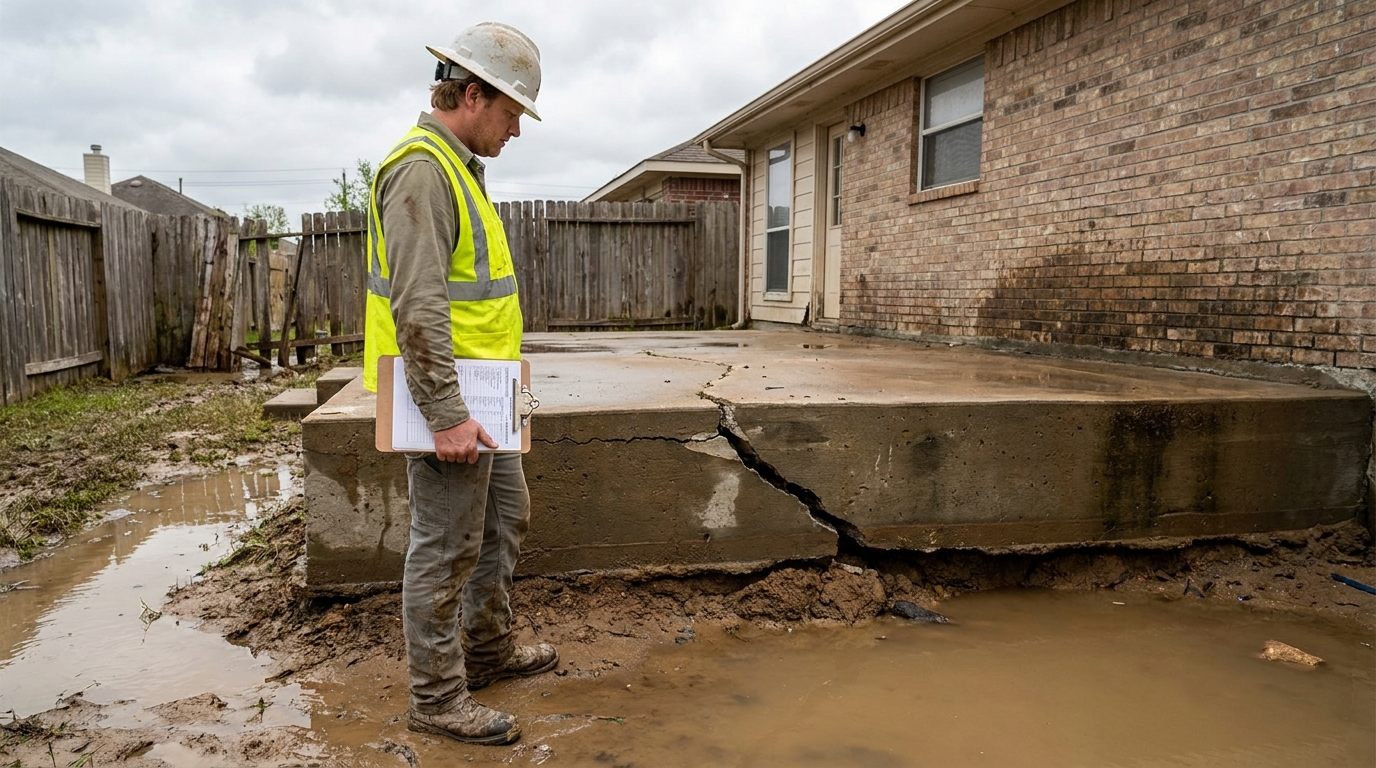
This exclusion targets structural elements most vulnerable to flooding. The NFIP identifies foundation walls, anchorage systems, and staircases as insured building property, but it also contains a separate general earth movement exclusion that bars coverage for any loss caused directly by earth movement, even if the earth movement is caused by flood. For Houston homeowners dealing with flood foundation damage, this is where disputes arise.
Commercial property owners face parallel language. Texas special form commercial policies cover most causes of loss except those specifically listed, typically excluding floods, earth movement, war, nuclear disaster, wear and tear, and insects or vermin. The overlap between flood and earth movement exclusions can leave business owners doubly exposed.
💡 Pro Tip: Before accepting an "earth movement" denial, ask your insurer in writing to identify the exact policy language and specific evidence supporting its causation finding. A vague reference to "soil movement" is not documented engineering evidence.
When an Earth Movement Denial May Be an Underpaid Flood Insurance Claim
Not every earth movement denial holds up, and Texas law gives policyholders meaningful tools to challenge improper use of the exclusion. An insurer cannot simply attach the "earth movement" label to avoid paying. Under Texas Insurance Code Section 541.060(a)(7), it is an unfair settlement practice to refuse to pay a claim without conducting a reasonable investigation. An adjuster who classifies damage as earth movement without thorough, site-specific inspection may be acting outside the law.
Misrepresenting policy coverage is also prohibited. Under Texas Insurance Code Section 541.060(a)(1), it is an unfair settlement practice to misrepresent a material fact or policy provision relating to coverage. If your insurer overstated the earth movement exclusion to justify a low payout, that may form the basis of a claim.
Insurers also carry a duty to act in good faith. Under Texas Insurance Code Section 541.060(a)(2)-(3), insurers must attempt in good faith to effectuate a prompt, fair, and equitable settlement once liability has become reasonably clear, and must promptly provide a reasonable explanation for any denial. You can review the full Texas unfair settlement practices statute to understand these protections. These provisions give Houston homeowners a path to dispute an exclusion used as a pretext.
An NFIP policy changes the playing field. Federal flood policies are not governed by the same state consumer-protection rules because federal law preempts state law for NFIP policies. Policyholders disputing an earth movement exclusion denial under an NFIP policy must navigate federal, not state, appeals and dispute processes. Knowing which set of rules applies is essential.
💡 Pro Tip: Independent evidence matters. A licensed engineer’s report distinguishing flood-driven damage from pre-existing soil settlement can be the difference between a denied claim and a fair payout.
Coverage Limits That Compound an Earth Movement Reduction
Even when coverage applies, NFIP limits and valuation rules can shrink what you recover. You can insure a residential building for up to $250,000, and belongings up to $100,000. When an earth movement exclusion carves out part of the structural damage, these ceilings leave even less room for full recovery.
Contents valuation often surprises homeowners. Belongings are covered at Actual Cash Value, their value at the time of damage, not original cost, with no option for full replacement value. Combined with an exclusion that reduces structural payout, this valuation rule can deepen the financial gap.
Deadlines under the NFIP are strict and unforgiving. You must give prompt written notice and submit a signed and sworn proof of loss form within sixty days. Missing this deadline can defeat an otherwise valid claim.
| Coverage Element | NFIP Limit | Key Limitation |
|---|---|---|
| Residential building | Up to $250,000 | Earth movement excluded |
| Residential contents | Up to $100,000 | Actual Cash Value only |
| Proof of loss | Required | 60-day filing deadline |
What Every Houston Homeowner Should Know About Flood Disclosures
Many Houston homeowners don’t realize their standard policy excludes flood damage until it’s too late. Texas law addresses this through a mandatory disclosure. Under Texas Insurance Code Section 2002.103(c), an insurer that issues or renews a property policy without flood coverage must include a conspicuous written statement warning that the policy does not cover flood damage even if hurricane winds and rain caused the flood.
That disclosure rule has a critical limit protecting insurers. A missing warning does not erase an exclusion. Under Texas Insurance Code Section 2002.103(e), an insurer’s failure to comply does not invalidate any exclusion in a policy. You cannot void an earth movement or flood exclusion simply because the insurer failed to warn you.
Standard homeowner’s coverage rarely covers flood losses. Standard homeowner’s insurance policies generally cover damage from sudden and accidental leaks but not flooding. The Texas Department of Insurance offers helpful Texas flood insurance basics that explain these distinctions.
Timing your coverage matters. There is a 30-day waiting period after you buy a flood policy before coverage goes into effect. Planning ahead of storm season is essential.
Key steps to protect your flood rights:
- Document damage thoroughly with photos, video, and dated records
- Request the insurer’s written basis for any earth movement denial
- Obtain an independent engineering assessment of causation
- Track every deadline, including the NFIP proof-of-loss window
If your claim has been rejected, learn how to appeal a denied flood insurance claim.
💡 Pro Tip: Keep a written log of every call, email, and adjuster visit. Documentation is often decisive when challenging a bad-faith or underpaid flood claim.
How a Houston Flood Damage Attorney Can Help
A policyholder-focused attorney can test whether an earth movement exclusion was applied correctly to your loss. Causation in flood cases is frequently disputed, and the difference between flood damage and soil movement is fact-dependent. An attorney can coordinate independent inspections, demand the insurer’s investigation file, and identify whether the carrier met its statutory duties.
Outcomes depend on specific facts, policy language, and evidence. No two flood claims are identical, and conditional rules under state and federal law may apply differently depending on your policy type. Working with an experienced Houston flood damage attorney helps ensure your rights are evaluated under the correct framework.
Frequently Asked Questions
1. Can my insurer deny my entire claim using the earth movement exclusion?
Not necessarily. While the exclusion can limit structural recovery, an insurer must investigate and may not misrepresent coverage. Improper use may support a dispute under Texas Insurance Code Section 541.060.
2. Does the earth movement exclusion apply to NFIP flood policies?
Yes. The NFIP excludes damage caused by earth movement, even if flood-caused. However, disputes over NFIP policies proceed through federal processes rather than Texas state remedies.
3. What if my insurer never warned me that flood damage was excluded?
A missing disclosure does not undo an exclusion. Under Texas Insurance Code Section 2002.103(e), an insurer’s failure to provide the required flood warning does not invalidate a flood or earth movement exclusion.
4. How long do I have to file my proof of loss under the NFIP?
Generally sixty days. You must submit a signed and sworn proof of loss form within sixty days of the loss. Missing this deadline can jeopardize an otherwise valid claim.
5. Is foundation damage from a flood ever covered?
It depends on the facts. Many foundation losses fall under the earth movement exclusion, but independent evidence showing a covered flood cause may support coverage in limited circumstances. Causation is often the central issue.
Protecting Your Recovery After a Houston Flood
The earth movement exclusion is one of the most powerful tools insurers use to reduce or deny Houston flood claims, but it is not unlimited. Texas law imposes duties of good faith, reasonable investigation, and honest communication, and federal NFIP rules create their own deadlines and dispute paths. When an insurer leans on this exclusion to justify an underpaid flood insurance claim, careful documentation, independent evidence, and clear understanding of governing statutes can make the difference.
If you believe your earth movement denial was unfair, the team at Fitts Law Firm, PLLC is ready to review your claim and explain your options. Call us today at 713-871-1670 or send us a message through our online contact form to take the next step toward protecting your home and your recovery.
