
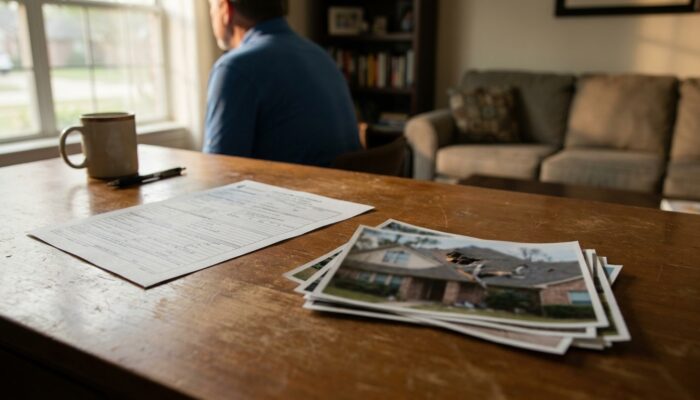
Understanding Proof of Loss Requirements for Houston Homeowners
If your Houston home suffers storm damage and you file an insurance claim, your insurer may require a proof of loss, a formal written statement detailing the occurrence, character, and extent of your loss. Many homeowners encounter this requirement only after a hurricane, hailstorm, or windstorm has disrupted their lives. Understanding what a proof of loss is, why insurers require it, and how Texas law protects you can mean the difference between a paid claim and a denied one.
If your insurer has denied or delayed your homeowner claim, Fitts Law Firm, PLLC can help you understand your rights. Call 713-871-1670 or reach out online to discuss your situation today.

What a Proof of Loss Form Actually Requires
A proof of loss is a sworn, written document that formally communicates the details of your claimed loss to your insurance company. It typically requires you to describe what happened, what was damaged, and repair or replacement costs. Under Texas law, your insurer must request all items, statements, and forms it reasonably believes are required, including a proof of loss form, within 15 days after receiving notice of your claim.
The form serves a specific legal function. It provides the insurer with documented proof needed to evaluate your claim. You may submit it through any method your insurer accepts, including mail, fax, or email. Because this document directly affects whether your claim is accepted or denied, accuracy and thoroughness matter.
💡 Pro Tip: Before completing your proof of loss, photograph and inventory every damaged item. Visual evidence strengthens your estimates and makes disputes harder.
Why Houston Insurers Require Proof of Loss
Insurance companies use the proof of loss form as a gatekeeping tool in the Texas insurance claim process. It shifts the burden to you to document and quantify damages in a formal sworn statement. For Houston homeowners dealing with hurricane, hail, or wind damage, this requirement creates a significant hurdle when damage is extensive and costs are difficult to estimate quickly.
Insurers also rely on proof of loss submissions to set claim timelines. Under TEX. INS. CODE § 542.056, the insurer must notify you in writing whether it accepts or rejects the claim within 15 business days after receiving all required documentation. If the insurer cannot meet that deadline, it may request up to 45 days extension with written explanation.
What Happens If You Do Not Receive Claim Forms on Time
Your insurer has deadline obligations under Texas law. After receiving written notice of your claim, the insurer must acknowledge the claim, begin investigating, and request all necessary forms within 15 days per TEX. INS. CODE § 542.055. If the insurer fails to send required forms, including proof of loss, within that period, it generally cannot later use your failure to submit those forms as grounds for denial.
💡 Pro Tip: Mark the date you submitted written notice on a calendar. If 15 days pass without acknowledgment or forms, document that gap, it may become critical evidence later.
How to Complete and Submit Your Proof of Loss in Texas
Filling out a proof of loss form requires careful attention, but you do not need to rush. If your insurer pressures you to estimate losses before you can do a thorough job, write "undetermined" on the form, sign and submit it, then supplement it later with accurate figures. This protects your claim while giving you time to gather contractor estimates, inventory damaged belongings, and document property damage properly.
Key Steps for a Strong Submission
Organizing your submission reduces claim denial risk. Consider these steps:
- Request your full policy to understand coverage requirements.
- Photograph and video all damaged areas before repairs.
- Obtain written estimates from licensed contractors.
- Keep copies of every document sent to or received from your insurer.
- Submit via a method creating a delivery record, such as certified mail or email with read receipt.
Written communication is essential. United Policyholders, a nonprofit consumer advocacy organization, advises Texas policyholders to communicate in writing with insurers for a clear paper trail. This prevents insurers from later claiming they never received critical information. Find additional guidance on policyholder rights in Texas from United Policyholders.
💡 Pro Tip: Send your proof of loss via certified mail with return receipt, and save a digital copy. Proving when and how you submitted the form can be decisive in disputes.
What Happens If You Miss the Proof of Loss Deadline
A late submission does not automatically destroy your claim. Under Texas law, if providing proof of loss within the policy’s timeframe was not reasonably possible, a late submission doesn’t mean automatic dismissal. Courts recognize that catastrophic storms, displacement, and damage assessment complexity can make strict compliance impractical.
However, do not treat the deadline casually. Insurers frequently use missed deadlines to deny or reduce claims. If you anticipate difficulty meeting your policy’s deadline, notify your insurer in writing, explain the circumstances, and request additional time.
Denied Insurance Claim Attorney in Houston: When You Need Legal Help
If your insurer denies your claim after you submit proof of loss, or uses the form to delay payment, Texas law provides meaningful remedies. Chapter 542 of the Texas Insurance Code governs claim processing and settlement. Under TEX. INS. CODE § 542.060, if the insurance company delays payment beyond the statutory deadline, it may owe penalty interest plus reasonable attorney fees if you sue and win. For weather-related property damage claims under Chapter 542A, the interest rate is calculated by adding 5% to the rate under § 304.003 of the Texas Finance Code. For other claims, the rate is 18% per year.
Texas law also prohibits unfair claim settlement practices. Under 28 Tex. Admin. Code § 21.203 and Tex. Ins. Code Ch. 541, insurers may not misrepresent policy provisions, fail to attempt prompt fair settlements when liability is clear, or refuse to pay claims without reasonable investigation. If your insurer engaged in these practices, you may have grounds for a bad-faith action beyond original policy benefits.
| Texas Prompt Payment Timeline | Deadline | Legal Authority |
|---|---|---|
| Insurer must acknowledge claim and begin investigation | 15 days after receiving written notice | TEX. INS. CODE § 542.055 |
| Insurer must request all required claim forms (including proof of loss) | 15 days after receiving notice of claim | TEX. INS. CODE § 542.055 |
| Insurer must accept or reject claim in writing | 15 business days after receiving all required documentation | TEX. INS. CODE § 542.056 |
| Extension if insurer cannot meet 15-business-day acceptance deadline | Up to 45 additional days with written explanation | TEX. INS. CODE § 542.056 |
Your Rights Under the Texas Consumer Bill of Rights
The Texas Consumer Bill of Rights gives you specific protections when dealing with a denied home insurance claim. If the company denies your claim in whole or part, it must give you written reasons. You also have the right to reject any settlement amount the insurer offers, including unfair valuations.
💡 Pro Tip: If your insurer offers a low settlement, you’re not obligated to accept it. You may reject any amount, obtain your own estimates, and negotiate or pursue legal remedies for full covered value.
Protecting Your Claim From the Start
Every action after property damage affects whether your insurer pays or denies your claim. Strong homeowner claim documentation in Houston starts with immediate photographs and written records, continues through a carefully completed proof of loss, and extends to every insurer communication. If you’ve been denied, underpaid, or delayed, an experienced denied insurance claim attorney in Houston can evaluate whether your insurer violated the Texas Prompt Payment Act or engaged in unfair settlement practices.
💡 Pro Tip: Keep a dedicated folder for all claim documents including your policy, correspondence, photos, estimates, and proof of loss form. Organized records strengthen your position if litigation becomes necessary.
Frequently Asked Questions
1. Can my insurer deny my claim solely because I missed the proof of loss deadline?
What Texas Law Says About Late Proof of Loss Submissions
Not necessarily. Under Texas law, if providing proof of loss within the policy’s timeframe was not reasonably possible, a late submission doesn’t automatically invalidate your claim. However, insurers may still attempt to use missed deadlines as denial grounds, so documenting obstacles is critical.
2. What should I write on the proof of loss form if I do not know my total damages yet?
Handling Uncertain Damage Estimates
Write "undetermined" on your proof of loss form and submit it, then supplement later with complete figures. This protects your right to claim full damages while complying with the insurer’s request for timely submission.
3. How long does my insurer have to respond after I submit proof of loss?
Texas Prompt Payment Deadlines
Your insurer must notify you in writing whether it accepts or rejects your claim within 15 business days after receiving all necessary documentation, including proof of loss. If it cannot meet that deadline, it may take up to 45 additional days but must provide written explanation under TEX. INS. CODE § 542.056.
4. What penalties can my insurer face for delaying payment on a valid claim?
Interest and Penalties Under the Texas Insurance Code
Under TEX. INS. CODE § 542.060, an insurer that delays payment beyond the statutory deadline may owe penalty interest plus reasonable attorney fees if the policyholder sues and prevails. For weather-related property damage claims under Chapter 542A, the interest rate is variable, calculated by adding 5% to the rate under § 304.003 of the Texas Finance Code. For other claims, the rate is 18% per year.
5. Do I have the right to reject a low settlement offer from my insurer?
Your Right to Challenge Unfair Valuations
Yes. The Texas Consumer Bill of Rights specifically provides that you may reject any settlement amount offered by your insurer, including unfair valuations. You are not required to accept the first offer and may pursue additional remedies.
Taking the Next Step After a Denied or Delayed Claim
Navigating the proof of loss requirement in Texas demands attention to detail, strict deadlines, and clear understanding of your rights under the Texas Insurance Code. Houston homeowners facing insurer pushback do not have to handle the process alone.
If you need guidance on a denied or delayed homeowner insurance claim, contact Fitts Law Firm, PLLC by calling 713-871-1670 or scheduling a consultation online. Your claim deserves thorough review from a team that understands the Texas insurance claim process and fights for policyholders.
