
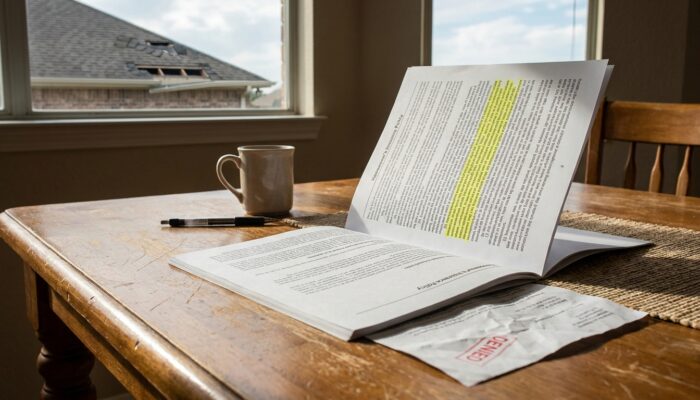
Understanding Policy Exclusions and Their Role in Houston Claim Denials
A policy exclusion is a provision in your homeowner’s insurance policy that removes coverage for specific types of losses, perils, or property. When you file a claim after a storm, roof leak, or other property damage, your insurer may point to an exclusion as the reason your claim does not qualify for payment. Many Houston homeowners receive denial letters with vague references to exclusions they never knew existed, leaving them frustrated and unsure of their next steps. Understanding what exclusions are, how insurers use them, and when a denial may be improper is essential to protecting your rights under Texas law.
If your homeowner’s claim was denied and you believe the exclusion cited does not apply, Fitts Law Firm, PLLC can help you evaluate your options. Call 713-871-1670 or reach out online to discuss your situation.
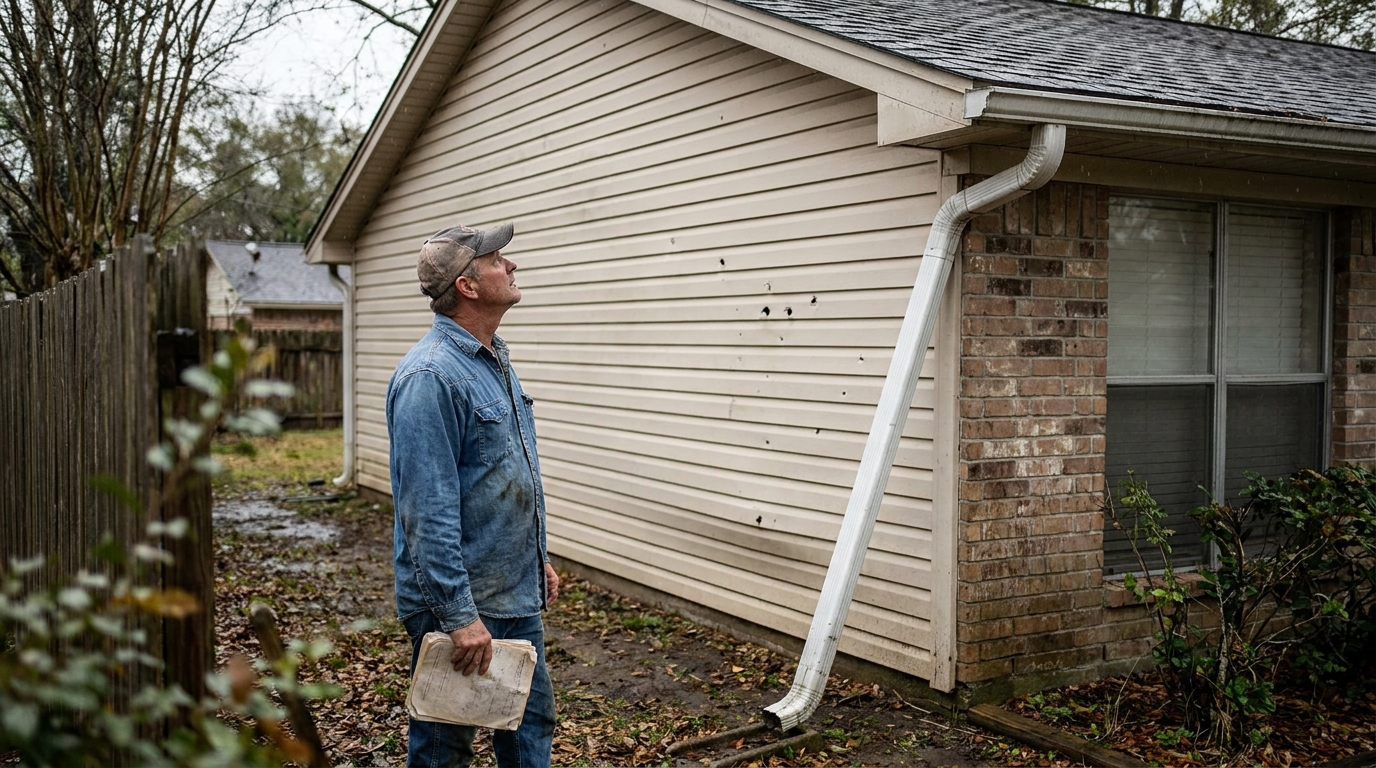
How Policy Exclusions Work in Houston Home Insurance
Policy exclusions define the boundaries of what your insurer has agreed to cover. Every homeowner’s policy in Texas contains a declarations page listing covered perils and a separate section outlining exclusions. Common exclusions include flood damage (requiring a separate policy), earth movement, gradual wear and tear, and neglect. When a covered peril like wind causes damage but the insurer argues the real cause was a pre-existing maintenance issue, the exclusion becomes the battleground.
Texas regulators exercise oversight over exclusion language insurers place in policies. Under Texas Insurance Code §2301.006(a), an insurer may not deliver a policy form unless it has been filed with and approved by the commissioner. The commissioner may disapprove or withdraw approval of a policy form if it violates any law (including rules adopted under the Insurance Code) or contains a provision or a title or heading that is unjust or deceptive, encourages misrepresentation, or violates public policy; this authority applies to forms filed under §2301.006 but is subject to exceptions for certain large commercial risks and some commercial lines under §§2301.004 and 2301.0031.
💡 Pro Tip: Request a complete copy of your policy, including all endorsements and riders, immediately after a loss. Many homeowners only have a declarations page and have never read the exclusion section the insurer later relies on.
Common Insurance Denial Reasons Texas Homeowners Should Know
Houston homeowners face claim denials for various exclusion-related reasons, and not all hold up under scrutiny. Below is a comparison of frequently cited exclusions:
| Exclusion Cited by Insurer | What It Usually Covers | When the Denial May Be Questionable |
|---|---|---|
| Wear and tear | Gradual deterioration over time | Storm damage is mischaracterized as pre-existing wear |
| Flood exclusion | Rising water from external sources | Wind-driven rain damage wrongly labeled as flood |
| Neglect | Failure to protect property after loss | Insurer claims neglect without evidence of homeowner inaction |
| Earth movement | Settling, shifting, or sinkholes | Foundation damage actually caused by plumbing failure |
| Cosmetic damage limitation | Dents that do not affect function | Hail damage impairs roof integrity but insurer calls it cosmetic |
Insurers sometimes apply exclusions broadly or inaccurately to minimize payouts. If your property damage claim was denied based on one of these exclusions, the critical question is whether the exclusion actually applies to your loss. You can learn more about common reasons Houston home insurance claims get denied to better understand your situation.
What Texas Law Requires When Insurers Deny a Claim
Texas imposes specific procedural requirements on insurers during the denial process. Under Texas Insurance Code §542.055, an insurer must acknowledge receipt of your claim, commence investigation, and request necessary documentation within 15 calendar days. Section 542.056 requires the insurer to accept or reject the claim in writing within 15 business days after receiving all requested items. When a Houston insurer cites a policy exclusion, that reason must be clearly communicated in writing.
Failure to follow these timelines carries consequences. Under §542.060, insurers who fail to comply face penalties of 18% annual interest on the claim amount plus reasonable attorney’s fees. These unfair claim settlement practices provisions ensure policyholders receive prompt and fair treatment.
💡 Pro Tip: Document every interaction with your insurer in writing. If the adjuster tells you something over the phone, follow up with an email summarizing the conversation. Written records are critical for proving the insurer failed to meet statutory deadlines.
Your Right to a Written Explanation
When your insurer denies a claim, you are entitled to know exactly why. A denial letter stating only "excluded peril" or "not covered" may not satisfy Texas law requirements. Under §541.060, insurers are prohibited from failing to provide a reasonable explanation based in policy language and from misrepresenting material facts or policy provisions. If your denial letter lacks a reasonable explanation tied to specific policy language and your loss facts, you may have grounds to challenge the decision.
Unauthorized Policy Changes and Exclusions
Texas law protects homeowners from surprise coverage modifications. Under Texas Insurance Code §2301.006, all policy forms, including endorsements that alter coverage, must be filed with and approved by the Texas Department of Insurance before use. If your insurer added an exclusion using an unapproved form or without proper notice, that modification may not be enforceable.
💡 Pro Tip: Review renewal documents and policy change notices carefully each year. Insurers may introduce new exclusions or narrower coverage terms at renewal, and continued premium payment could be treated as acceptance.
When a Denied Insurance Claim Attorney in Houston Can Help
Not every denial based on a policy exclusion is legitimate. Insurers have teams of adjusters and engineers supporting their coverage decisions. Homeowners may be reading their policy for the first time after a loss. A denied insurance claim attorney in Houston can level the playing field by analyzing whether the exclusion was properly applied to your damage facts.
Texas Insurance Code Chapter 541 provides policyholders with powerful legal tools when insurers act in bad faith. This chapter defines and prohibits unfair or deceptive practices in the insurance business, including misrepresenting material facts or policy provisions, failing to provide reasonable explanations for denials, and failing to affirm or deny coverage within a reasonable time.
Policyholders who prove an insurer knowingly violated Chapter 541 may recover up to three times their actual damages under §541.152(b), plus attorney’s fees. "Knowingly" means actual awareness of the falsity, unfairness, or deceptiveness of the conduct. This treble damages provision serves as a strong deterrent against insurers who improperly wield exclusions to avoid paying valid claims.
The Implied Covenant of Good Faith and What It Means for Your Claim
Every insurance policy in Texas carries a common-law duty of good faith and fair dealing. When an insurer violates this duty by unreasonably denying a valid claim without legitimate basis, it may be liable for damages beyond the original claim value. This applies directly when insurers cite policy exclusions that do not match the actual cause of loss.
Failure to properly investigate before denying constitutes bad faith in many cases. If your insurer denied your Houston homeowner claim without inspecting the damage, reviewing your contractor’s estimate, or considering independent evidence of the cause of loss, that investigation failure could support a bad faith claim. An insurance coverage dispute Houston attorney can evaluate whether the insurer’s investigation met Texas law standards.
- Unreasonable denial of a valid claim without legitimate reason
- Misrepresenting what your policy exclusion actually says
- Failing to investigate the cause of loss before applying an exclusion
- Delaying acknowledgment or payment beyond statutory deadlines
💡 Pro Tip: Obtain your own independent damage assessment from a licensed contractor or public adjuster before accepting your insurer’s conclusion. Independent evidence can powerfully rebut an insurer’s exclusion-based denial.
Regulatory Oversight of Policy Exclusions in Texas
Texas regulators maintain broad authority to police unfair exclusion language. Under Texas Insurance Code §2301.007(a), the commissioner may disapprove or withdraw approval of a policy form if it violates any law (including rules adopted under the Insurance Code) or contains a provision or a title or heading that is unjust or deceptive, encourages misrepresentation, or violates public policy. That authority applies to forms filed under §2301.006 but is subject to exceptions for certain large commercial risks and some commercial lines under §§2301.004 and 2301.0031.
This regulatory framework means not every exclusion is beyond challenge. If an exclusion in your homeowner’s policy was never properly filed or approved, or if it conflicts with Texas public policy, the insurer’s reliance on that exclusion may be vulnerable.
💡 Pro Tip: If your insurer cannot point you to the specific policy page and paragraph containing the cited exclusion, ask for that reference in writing. You have every right to know the exact contractual basis for a denial.
Frequently Asked Questions
1. What should I do immediately after receiving a denial based on a policy exclusion?
Request the full denial in writing, including the specific policy language the insurer relies on. Compare that language to the actual facts of your loss and preserve all documentation, photographs, and contractor estimates related to the damage.
2. Can my insurer add an exclusion to my policy without telling me?
Generally, no. Under Texas Insurance Code §2301.006, all policy forms and endorsements must be filed with and approved by the Texas Department of Insurance, and your policy terms typically require notice of material changes. An exclusion appearing without proper notice or approval may not be valid.
3. How long does my insurer have to respond to my claim in Texas?
Under Texas Insurance Code §542.055, the insurer must acknowledge your claim within 15 calendar days. The insurer must accept or reject the claim within 15 business days after receiving all requested documentation under §542.056, and delayed payments can trigger 18% annual interest penalties.
4. What is insurance bad faith in the context of a denied homeowner claim?
Insurance bad faith occurs when an insurer violates its duty of good faith and fair dealing or Chapter 541 statutory prohibitions, such as denying a valid claim without legitimate reason, misrepresenting policy provisions, or failing to conduct proper investigation before applying an exclusion.
5. What damages can I recover if my insurer wrongfully denied my claim?
Beyond the original claim amount, you may be entitled to 18% annual interest under §542.060 and, if the insurer knowingly engaged in unfair practices under Chapter 541, up to three times your actual damages under §541.152(b). Attorney’s fees are also recoverable.
Protecting Your Rights After a Houston Claim Denial
Receiving a denial letter does not mean the conversation is over. Policy exclusions are legitimate parts of insurance contracts, but they must be applied accurately, supported by proper investigation, and communicated clearly under Texas law. When insurers stretch exclusions beyond their intended scope or fail to follow procedural requirements of Chapters 541 and 542, homeowners have legal avenues to fight back. Understanding where your insurer may have fallen short is key to determining your next move.
If you are a Houston homeowner dealing with a denied or underpaid property damage claim, Fitts Law Firm, PLLC is ready to review your policy and your insurer’s conduct. Call 713-871-1670 or contact us today to start exploring your options.
